Baby Passport Photo Requirements China 2026
Getting a passport photo for a baby sounds easy. It’s just a picture, right? A quick snap, a cute face, done. Not quite. When it comes to baby passport photo requirements for China in 2026, the rules are precise. Sometimes surprisingly strict. And if parents miss even a small detail - wrong background shade, slight head tilt, shadow under the chin - the application can be rejected. That means delays. Frustration. More photos. More paperwork. So let’s break it all down clearly, practically, and without the usual robotic checklist tone. Here’s what really matters.
Official Baby Passport Photo Requirements for China (2026 Update)
China maintains specific biometric standards for passport photos, including infants. Babies are not exempt from compliance just because they can’t sit still. Here are the current technical requirements:
Photo Size and Dimensions
- Photo size: 33mm x 48mm - Head height: 28mm - 33mm - Head width: 21mm - 24mm - Background: plain white - No borders - Printed on high-quality photo paper Digital submissions must meet resolution standards and be clear, sharp, and properly exposed. Sounds simple? On paper, yes. In reality, babies don’t follow measurement charts.
Background Requirements
The background must be: - Pure white - Evenly lit - Free of shadows - No patterns or texture Cream walls won’t pass. Off-white blankets often create shadows. Textured fabric? Risky. If you ask most professional photographers, the background is where many baby passport photos fail. Parents assume “close enough” is fine. It usually isn’t.
Facial Expression Rules for Infants
This is where things get interesting. Babies are not required to have a perfectly neutral expression the way adults are. However, certain standards still apply: - Eyes should be open (as much as possible for newborns) - The baby must face the camera directly - Mouth closed if possible - No exaggerated facial expressions A slight natural baby expression is acceptable. A full crying meltdown - not so much. China’s biometric systems rely on facial symmetry and clear feature visibility. That means: - No pacifiers - No toys - No hands covering the face - No parent hands visible in frame Which raises the obvious question: how does anyone photograph a three-month-old without hands supporting them?
Positioning a Baby for a Chinese Passport Photo
Here’s the practical part. Parents typically use one of three methods:
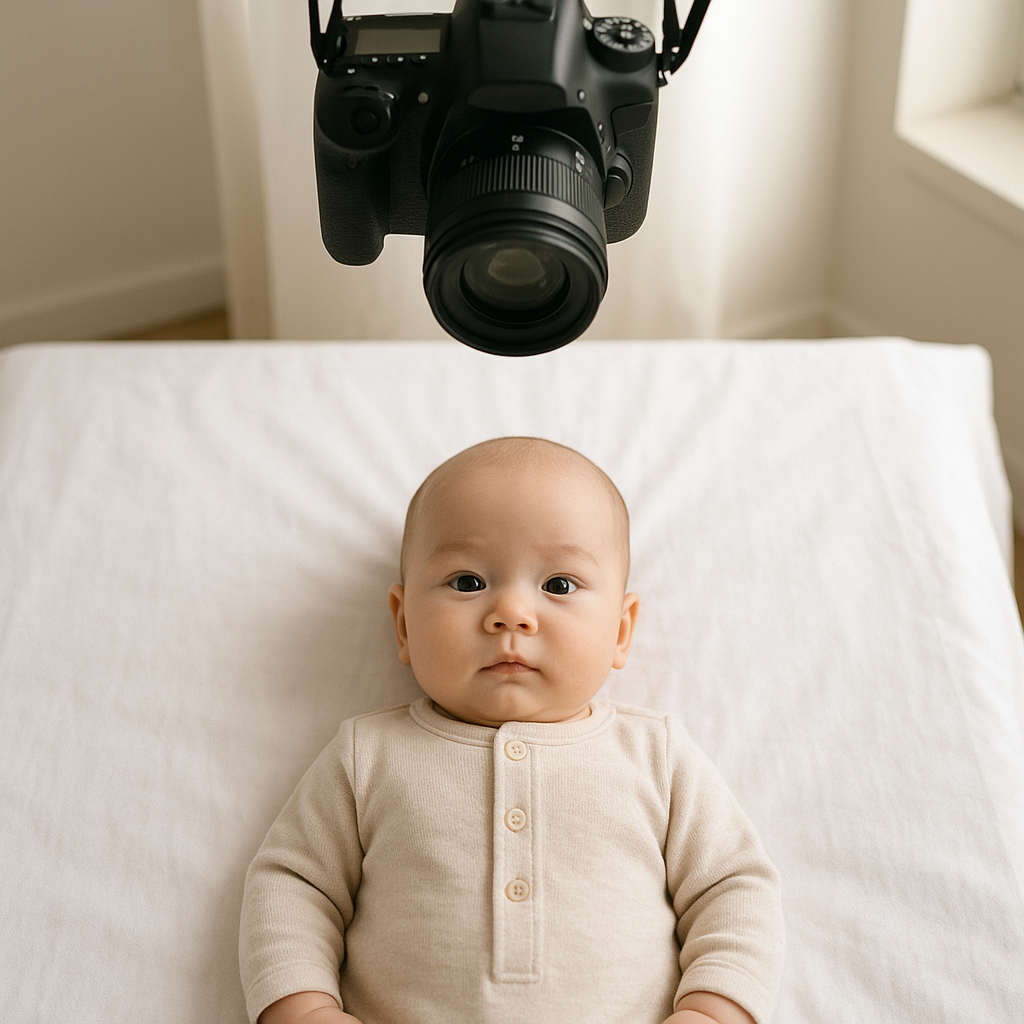
1. Lying Down Method
- Lay baby on a white sheet - Shoot from directly above - Ensure no shadows around head This works well for newborns who cannot sit upright.
2. Supported Sitting
- Use a white car seat cover - Parent supports from behind (completely hidden) - Baby faces camera straight-on
3. Professional Studio Setup
Many families now skip DIY attempts altogether and use specialized passport photo services that understand Chinese visa and passport compliance. One increasingly popular option is BabyPassportMaker.com, which guides parents through compliant baby passport photos that meet official biometric standards. The appeal? Fewer rejections. Less guesswork. Honestly, when government paperwork is involved, guesswork is the enemy.
Clothing Rules for Baby Passport Photos
Another detail that catches families off guard: clothing. What’s allowed: - Simple everyday clothing - Neutral or soft colors - No uniforms - No white clothing that blends into background What’s not allowed: - Hats or headbands (unless religious reasons apply) - Costume outfits - Clothes with large graphics covering chest area Tiny bows? Usually fine if they don’t obscure the face. Giant decorative headpieces? Not recommended. The goal is clarity. The baby’s face must stand out cleanly against the white background. Think passport photo, not family holiday card.
Lighting Standards - The Silent Dealbreaker
Lighting can make or break compliance. Chinese passport authorities require: - Even lighting across face - No red-eye - No harsh shadows - Natural skin tones Overexposed images get rejected. Underexposed images get rejected. Yellow indoor lighting? Often rejected. If lighting were a metaphor, it would be salt in cooking. You barely notice when it’s right. But when it’s wrong, everything tastes off. Soft natural daylight works best. Facing a window. No direct sun hitting the baby’s face.
Common Reasons Baby Passport Photos Get Rejected
Here’s a quick reality check. Rejections usually happen because of: 1. Incorrect head size ratio 2. Shadows behind ears 3. Slight head tilt 4. Visible parental hands 5. Blurry image from movement 6. Background not pure white 7. Baby looking away from camera Have you ever tried getting a baby to look directly at anything for more than three seconds? Exactly. That’s why multiple shots are almost always necessary.
Digital vs Printed Baby Passport Photos for China
In 2026, many Chinese passport applications begin with digital uploads before printed versions are submitted. For digital files: - High resolution required - No filters - No retouching - JPEG format typically accepted Parents sometimes attempt to “fix” minor issues using editing apps. Smoothing skin. Removing shadows. Adjusting alignment. Bad idea. Biometric systems detect unnatural edits. Over-editing can lead to rejection or delays. It’s better to capture it correctly from the start than to digitally patch mistakes afterward.
Special Considerations for Newborns
Newborns under six months get a bit of flexibility, but not much. Authorities understand: - Eyes may not fully open - Head control is limited However, visibility remains mandatory. The face must be clearly identifiable. A sleeping newborn photo? Usually unacceptable. Yes, even if it’s adorable.
How Long Is a Chinese Baby Passport Photo Valid?
Passport photos must reflect the child’s current appearance. For infants, appearance changes quickly. If there’s a noticeable difference between the photo and the baby at the time of submission, authorities may request a new one. Babies grow fast. Chubby cheeks appear. Hair changes. Expressions evolve. A six-month-old photo for a now one-year-old applicant might raise questions.
Tips for Stress-Free Baby Passport Photos
Preparation makes a difference. Here’s what helps: - Feed the baby beforehand - Choose nap time wisely - Keep the room warm and comfortable - Take multiple shots - Review sizing carefully before printing Parents who rush often end up redoing the process. Patience wins here.
Why Accuracy Matters More in 2026
China continues to modernize its biometric verification systems. Facial recognition technology is becoming sharper, more automated, more data-driven. That means: - Stricter image compliance - Faster rejection of non-conforming photos - Increased reliance on digital accuracy The margin for error is shrinking. And when travel timelines are tight - visa appointments booked, flights reserved - a rejected baby passport photo is the last surprise any parent wants.
Final Thoughts on Baby Passport Photo Requirements China 2026
The rules aren’t impossible. They’re just specific. Think of the process like assembling a tiny puzzle. Every piece - background, lighting, head size, facial position - must click into place. Miss one, and the whole picture doesn’t qualify. Parents who understand the requirements ahead of time avoid the redo cycle. They plan. They measure. They double-check. And increasingly, they use specialized services designed for infant passport compliance rather than hoping a quick smartphone snap will pass. Because when it comes to baby passport photo requirements for China in 2026, close enough isn’t good enough. Precision matters. And yes, even for the tiniest traveler.