Baby Visa Photo Dimensions for India and Asia
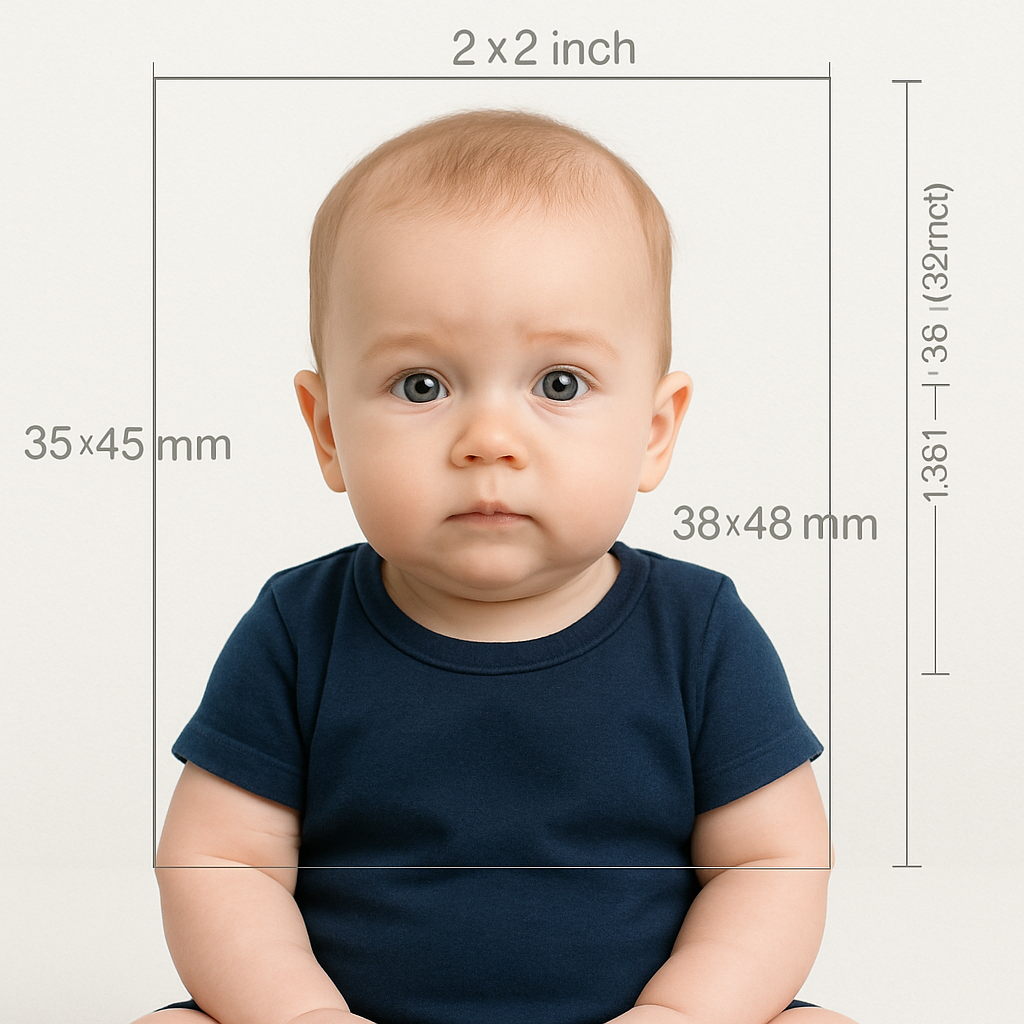
Anyone who has ever tried arranging international travel with an infant knows this truth - the paperwork feels bigger than the suitcase. And right at the center of that paperwork? The photo. Tiny human. Very big rules.
When it comes to baby visa photo dimensions for India and Asia, the details matter more than most parents expect. One millimeter off. A shadow in the wrong spot. Eyes not fully visible. Rejection. It happens more often than people think.
This guide breaks everything down in plain English. No bureaucratic fog. No guesswork. Just clear standards, practical tips, and a few strong opinions along the way.
Why Baby Visa Photo Requirements Are So Strict
Governments use biometric systems to verify identity. That means even infants need compliant images. The software does not care that the subject is six months old and fascinated by ceiling fans.
Facial recognition systems rely on:
- Precise spacing between eyes
- Clear chin-to-crown measurement
- Neutral background contrast
- Proper lighting without shadows
Sounds simple, right? In reality, photographing a wiggly infant with a neutral expression is like trying to take a passport photo of a hummingbird.
Standard Baby Visa Photo Dimensions for India
India has specific technical requirements. Parents should not assume the rules match other Asian destinations.
Indian Visa Photo Size Requirements
- Size: 2 inches x 2 inches (51 mm x 51 mm)
- Head height: 25 mm to 35 mm from chin to crown
- Background: Plain white
- Expression: Neutral, mouth closed
- Eyes: Open and clearly visible
- No shadows on face or background
The square format often surprises parents. Many countries use rectangular formats, but India sticks to the 2 x 2 inch standard. Getting that wrong can delay an application by weeks.
Another overlooked detail? The head must be centered. Not slightly tilted. Not leaning. Centered.
Baby Visa Photo Dimensions Across Asia
Asia is not one-size-fits-all. Each country sets its own rules, and some vary more than expected.
Common Photo Sizes in Asian Countries
- China - 33 mm x 48 mm, white background
- Japan - 45 mm x 45 mm, plain light background
- Thailand - 35 mm x 45 mm
- Singapore - 35 mm x 45 mm
- UAE - 43 mm x 55 mm
Notice the variation? Some are square. Others are rectangular. Even a 2 mm difference can lead to rejection because embassy scanning templates are rigid.
If you ask seasoned visa consultants, they will say the same thing - always verify the exact dimensions for the destination country before printing.
Special Considerations for Infant Photos
Adult standards apply, but there are small allowances for infants. Small being the key word.
What Is Allowed for Babies
- Slightly open mouth for newborns
- Eyes partially open for very young infants
- No visible hands supporting the head
What Is Not Allowed
- Parents visible in the frame
- Toys, pacifiers, or blankets in view
- Shadows across the face
- Textured or patterned background
Here is a detail many people miss - even if a parent holds the infant, their hands must not appear in the picture. That includes fingers near the neck or ears. Cropping does not always fix it because the proportions shift.
Background and Lighting - More Important Than You Think
A clean white background sounds easy. In practice, it is surprisingly tricky. Household walls often look white but photograph slightly gray or yellow.
Lighting should be:
- Even on both sides of the face
- Free of harsh shadows under the chin
- Without glare on the forehead
Natural light works well if positioned correctly. Place the infant facing a window, but avoid direct sunlight. Direct beams create sharp contrast lines, and embassies reject those images quickly.
Think of proper lighting like baking - too little and the image looks flat, too much and everything burns.
Clothing Rules for Baby Visa Photos
Clothing does not get as much attention as it should.
Guidelines generally include:
- No white outfits if the background is white
- No hats or headbands unless for religious reasons
- No heavy patterns or distracting prints
Dark, solid colors usually work best. They create contrast and help facial features stand out clearly.
And yes, even tiny decorative bows can cause issues if they cast shadows on the forehead.
Digital vs Printed Photos - What Parents Need to Know
Many visa applications now require digital uploads. Others still demand printed copies. Sometimes both.
Digital Specifications Often Include:
- JPEG format
- Specific pixel dimensions
- File size limits, often under 1 MB
- No filters or digital enhancements
Here is where mistakes happen. Parents resize images manually and distort proportions. Faces stretch slightly. The system detects it. Application denied.
Honestly, this is where a specialized tool makes sense. Services like BabyPassportMaker.com automatically adjust dimensions, background color, head size, and alignment according to country-specific requirements. It removes the guesswork and the constant measuring.
Efficiency matters when timelines are tight.
Step-by-Step: How to Get a Compliant Baby Visa Photo
For those who prefer a structured approach, here is a practical checklist.
- Check the exact country requirements - size, background, format.
- Dress the infant in a solid, darker outfit.
- Use a plain white sheet or wall for backdrop.
- Position the child upright with face fully visible.
- Take multiple shots - expect movement.
- Verify chin-to-crown measurement.
- Crop carefully without altering proportions.
- Confirm file size and resolution before submission.
It sounds methodical because it needs to be. Skipping even one step increases the risk of rejection.
Common Reasons Baby Visa Photos Get Rejected
Embassies rarely explain in detail, but patterns appear repeatedly.
- Incorrect dimensions
- Shadow behind ears
- Head not centered
- Background not fully white
- Low resolution
- Red-eye effect
Red-eye, in particular, triggers automatic rejection in digital systems. Flash photography in dim rooms often causes it. Better lighting reduces that risk dramatically.
Are Professional Studios Necessary?
Here is a hot take - not always.
Traditional studios sometimes lack updated knowledge about infant-specific rules for Asian visas. They may default to standard adult passport sizing. That assumption can create problems.
At the same time, DIY attempts without proper measurements can fail just as easily. The key is accuracy, not location.
Technology has shifted the landscape. Online tools tailored to baby visa photo dimensions for India and Asia simplify compliance while keeping control in the parent’s hands.
Final Thoughts on Getting It Right the First Time
Travel planning with an infant already requires patience. Flights, vaccinations, documents, feeding schedules - it is a lot.
The photo should not become the obstacle.
Understanding the exact baby visa photo dimensions for India and Asia saves time, reduces stress, and prevents last-minute embassy panic. Measure carefully. Follow official specs. Use reliable tools when needed.
Because when the paperwork is finally approved and the tickets are booked, that tiny square image becomes something bigger - the first step in a new adventure.