Baby Passport Photo for Adoption and Surrogacy
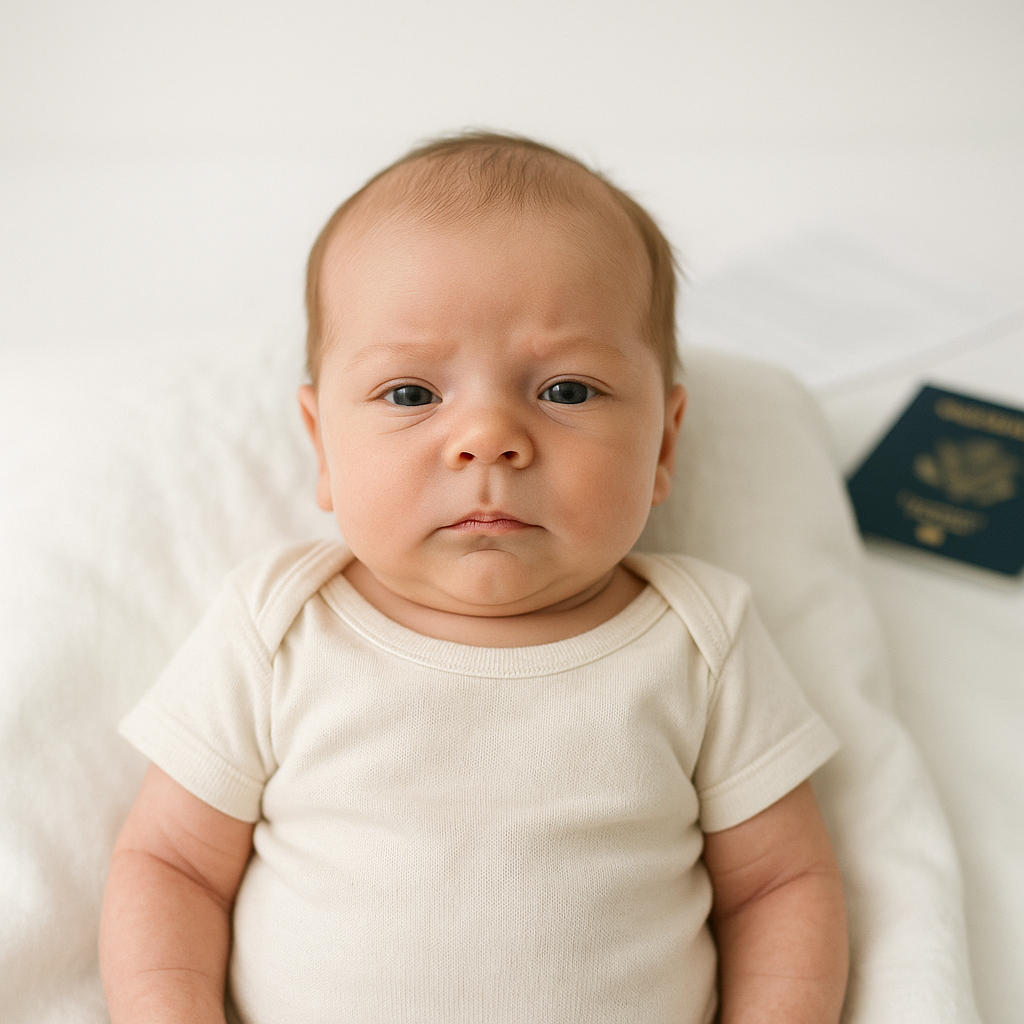
There is something quietly monumental about applying for a baby’s passport. It is not just paperwork. It is a doorway. For families navigating adoption or surrogacy, that tiny square photo becomes a symbol of arrival, belonging, and a long-awaited beginning.
Yet here’s the part no one talks about enough - getting a baby passport photo for adoption and surrogacy can feel strangely stressful. The rules are strict. The timelines are tight. And the baby? The baby does not care about government specifications.
So how does one get it right the first time? And why does it matter so much in adoption and surrogacy cases?
Why a Baby Passport Photo Matters More in Adoption and Surrogacy
In a typical family vacation scenario, a passport photo is just a requirement. In adoption or surrogacy journeys, it is often tied to immigration paperwork, citizenship applications, court documents, and embassy appointments. One rejected image can delay travel. Sometimes by weeks.
For intended parents waiting abroad, that delay feels endless.
International adoption cases especially depend on precise documentation. Domestic surrogacy arrangements may still require travel between states or countries. Each situation has layers of legal nuance. The passport photo sits at the center of it all - small, simple, and surprisingly powerful.
Common Situations Where a Baby Passport Photo Is Required
- International adoption finalization
- Citizenship documentation after surrogacy abroad
- Emergency travel clearance
- Visa processing for newborns
- Embassy registration appointments
Sounds straightforward, right? Not exactly.
Passport Photo Rules for Babies - Yes, They’re Strict
Governments do not relax standards just because the subject is adorable. A baby passport photo must meet the same technical requirements as an adult’s:
- Plain white or off-white background
- No shadows on face or backdrop
- Eyes open and visible
- Neutral expression
- No hands in frame - including a parent’s
- Correct head size and positioning
Now imagine achieving all of that with a newborn who cannot hold their head steady. Exactly.
Lighting becomes critical. So does positioning. Even the tiniest shadow near the ear can trigger rejection. Officials use biometric scanning systems now. The software is not sentimental.
The Unique Challenge for Adoptive and Surrogacy Families
Families formed through adoption or surrogacy often operate on compressed timelines. There may be hospital discharge deadlines, visa appointments scheduled months in advance, or court documents that must align perfectly.
A rejected baby passport photo can ripple outward like a stone thrown into still water. One delay touches everything.
Here’s a hot take - trying to take these photos casually with a phone, without understanding compliance rules, is often what causes the problem. The lighting might look fine to the eye. The baby looks precious. But the proportions? Slightly off. The crop? Too tight. The background? Not fully uniform.
And back it goes.
How to Take a Baby Passport Photo the Right Way
There are two main approaches. Professional in-person photography. Or an online passport photo service designed specifically for infants.
If you ask many experienced parents, convenience usually wins.
At-Home Setup Tips
For those choosing to take the image at home, these techniques help:
- Lay the baby flat on a white sheet with no wrinkles
- Use natural daylight near a window
- Avoid overhead lights that cast shadows under the chin
- Photograph from directly above
- Remove pacifiers, hats, bows, and clips
Keep it simple. The goal is clarity, not artistry.
Some parents place a white poster board beneath the sheet to ensure solid color. Others gently support the baby’s head from underneath and edit the supporting hand out later. Careful though - visible editing marks can cause rejection.
Why Many Families Use Online Passport Services
This is where services like BabyPassportMaker.com step in. Instead of guessing whether the photo meets official standards, families upload their image and receive a professionally adjusted, government-compliant version.
It removes the uncertainty. And in adoption or surrogacy situations, reducing uncertainty is everything.
Think of it like hiring a translator when dealing with legal paperwork. Could you attempt it alone? Sure. But precision matters.
Benefits of Using a Specialized Baby Passport Photo Service
- Automatic background correction
- Proper head sizing and alignment
- Compliance checks against current regulations
- Fast turnaround for time-sensitive travel
- Digital and print-ready formats
It saves time. It lowers stress. And it prevents resubmissions.
International Adoption - Extra Considerations
When adoption crosses borders, documentation becomes even more layered. Some countries require multiple photo copies. Others request specific dimensions that differ slightly from standard U.S. passport requirements.
Have you ever tried deciphering embassy instructions written in dense bureaucratic language? It can feel like assembling furniture without clear diagrams.
Parents must confirm:
- Exact size measurements
- Number of copies needed
- Matte or glossy finish requirements
- Recent photo timeframe rules
Missing a minor detail may mean rescheduling embassy visits - which is no small inconvenience when international travel is involved.
Surrogacy Abroad - Citizenship and Travel Timing
In international surrogacy cases, newborns may need passports quickly to travel home with intended parents. Timing is delicate. Court orders, birth certificates, DNA testing in some regions - all of it intersects with passport processing.
The baby passport photo becomes one of the first formal images of that child as a recognized citizen.
Honestly, that carries emotional weight.
And yet, the technical side still rules. The baby must face forward. Eyes open. No smiling parent peeking from the corner.
Common Mistakes to Avoid
- Using a patterned blanket as background
- Allowing shadows behind the ears
- Submitting a cropped image that cuts off the chin
- Leaving red-eye uncorrected
- Uploading low-resolution files
Each of these errors can delay processing. Small details. Big consequences.
Emotional Significance Behind the Photo
There is also a softer layer to this conversation. The first passport photo often becomes part of the child’s life story. It may be tucked into adoption scrapbooks. Saved alongside hospital bracelets. Framed quietly in a drawer.
It represents movement - from waiting to togetherness.
That tiny image says, this child belongs somewhere officially now.
And that is powerful.
Practical Checklist Before Submitting
Before pressing upload or mailing documents, families should pause and review:
- Is the background fully plain and evenly lit?
- Are the baby’s eyes clearly visible?
- Is the head centered with proper spacing?
- Is the resolution sharp and not pixelated?
- Are country-specific size requirements confirmed?
Taking two extra minutes here can save weeks later.
Final Thoughts on Baby Passport Photos for Adoption and Surrogacy
The process may seem bureaucratic. Technical. Even tedious.
But zoom out for a second.
This photo is often tied to a much bigger journey - one filled with paperwork, hope, patience, and sometimes years of waiting. Getting the baby passport photo right is one small victory in that larger story.
Families deserve tools that make it easier. Services like BabyPassportMaker.com simplify a step that does not need to be complicated. And when timelines matter, simplicity is not just convenient. It is essential.
At the end of the day, the goal is clear. A smooth approval. A stamped passport. A journey home - or forward - without unnecessary delays.
Because for adoptive and surrogacy families, every step forward feels significant.
Even a two-inch square photo.