Baby Passport Photo for Canadian Visa Requirements
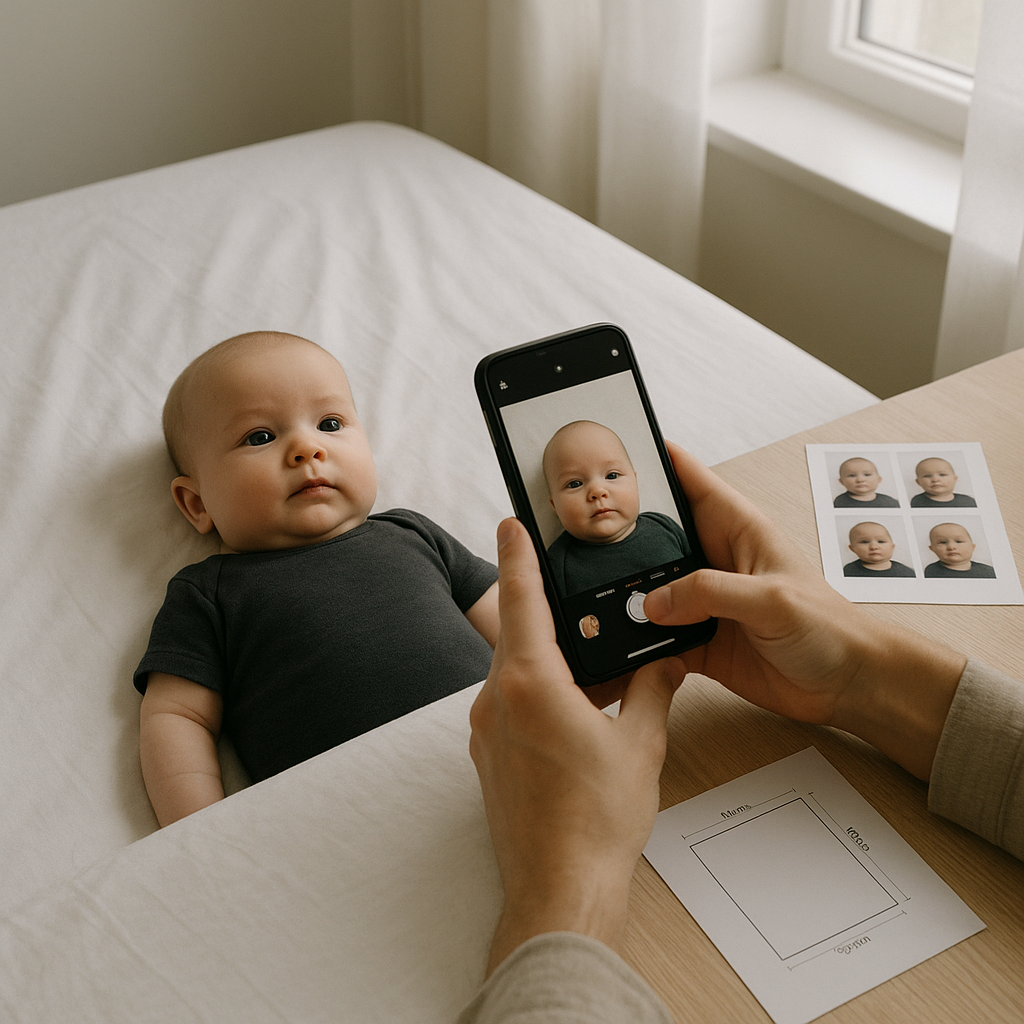
Applying for a Canadian visa is stressful enough. Add a baby to the mix, and suddenly the smallest details feel enormous. The photo. The measurements. The expression - or lack of one. Parents quickly discover that a baby passport photo for Canadian visa requirements is not just a cute snapshot. It is a strict, technical document. And if it is wrong? The application can be delayed. Or worse, rejected.
Sounds dramatic? Maybe. But immigration authorities are precise for a reason.
This guide walks through exactly what matters, what trips people up, and how to get it right the first time.
Why Baby Passport Photos Are So Strict
Canada takes identity verification seriously. A visa photo is not just for decoration on paperwork. It is used for biometric matching, border control checks, and long-term identification records.
Even for infants.
Here’s the thing - babies grow fast. Their faces change quickly. So the photo must clearly show distinct features. No shadows. No distortion. No playful filters, obviously.
If you ask most parents, the hardest part is not the paperwork. It is getting a tiny human to cooperate for five seconds.
Official Baby Passport Photo Requirements for Canadian Visa
Let’s break down the exact specifications. These are not flexible suggestions. They are requirements.
Photo Size and Dimensions
- 50 mm wide x 70 mm high
- Face height between 31 mm and 36 mm from chin to crown
- Neutral background - plain white or light-colored
Yes, they measure the face. Precisely. Imagine fitting a tiny portrait into a carefully measured frame. That is essentially what immigration officers do.
Expression and Position
- Eyes open and clearly visible
- Mouth closed
- Neutral expression
- Head centered and straight
Now, here’s where reality collides with regulation. Babies do not understand "neutral expression." They wiggle. They blink. They decide that now is the perfect time to yawn.
Still, the image must show a clear, unobstructed view of the face. No pacifiers. No toys. No parent hands visible.
Lighting and Quality
- No shadows on the face or background
- No glare
- No red-eye
- High resolution and sharp focus
Think of lighting like a spotlight on a stage. It should illuminate evenly, not create dramatic effects. This is not a studio portrait session. It is documentation.
Common Mistakes Parents Make
Honestly, many rejections happen because of small, preventable errors. Tiny missteps. But they matter.
Here are the most frequent problems:
- Incorrect size - Standard passport photos from other countries may not match Canadian visa dimensions.
- Shadows behind the head - Especially common when photos are taken at home.
- Visible hands - Supporting the baby from behind without fully hiding hands.
- Open mouth or blurred face - Movement during the shot.
- Using old photos - Babies change rapidly. The photo must reflect their current appearance.
It may feel minor, but immigration officials are trained to notice these details immediately. One small inconsistency can pause an entire application.
Can You Take a Baby Visa Photo at Home?
Yes. But it requires patience and precision.
Some parents lay a white sheet on the floor and place the baby on their back. Others use a car seat covered with a white cloth. Both methods can work if done carefully.
However - and this is important - the final image must meet all official Canadian visa photo requirements. Cropping alone is not enough. Proportions must be exact.
That is why many families turn to professional solutions or specialized online services.
Using Online Services for Baby Passport Photos
Technology has changed the process. Instead of rushing to a studio with a fussy infant, parents can take a photo at home and have it professionally adjusted.
Services like BabyPassportMaker.com are designed specifically for infant passport and visa images. The platform ensures:
- Correct Canadian visa dimensions
- Background adjustments to meet requirements
- Proper face alignment
- Compliance verification before download
It is a bit like having a digital passport booth in your living room. Convenient. Controlled. Less chaotic.
And for many parents, that convenience is everything.
Tips for Getting the Perfect Baby Passport Photo
Preparation makes all the difference. A few simple strategies can dramatically improve results.
1. Choose the Right Time
Try when the baby is well-rested and fed. A calm baby is easier to photograph. Obvious? Yes. But often overlooked in the rush.
2. Use Natural Light
Position the baby near a window during daylight. Avoid direct sunlight. Soft, indirect light reduces harsh shadows.
3. Keep Clothing Simple
Avoid white outfits that blend into the background. Choose solid, darker colors. No hats. No headbands. The face must be fully visible.
4. Maintain Head Support - Invisibly
If support is needed, ensure no hands or objects appear in the final image. This often means taking multiple shots and selecting the cleanest one.
5. Take Multiple Photos
Do not rely on a single image. Capture several options. Small changes in expression or eye position can make one photo acceptable and another unusable.
What Makes Canadian Visa Photos Different?
Some countries accept slightly different dimensions or allow minor expression variations. Canada does not bend easily.
The facial measurement requirement - 31 mm to 36 mm - is particularly strict. That specific range ensures consistency across all applications.
It is like fitting puzzle pieces into a larger security system. Each photo must align perfectly.
How Long Is a Baby Visa Photo Valid?
Generally, the photo should reflect the baby’s current appearance. While there is no extremely short expiration window, using a very old image can cause issues if the baby looks significantly different.
Given how quickly infants change, it is wise to use a recently taken picture - ideally within the last few months.
Digital vs Printed Photos
Depending on the visa application process, parents may need:
- Printed physical photos
- High-resolution digital files
Always check the specific submission instructions. Some online portals require digital uploads with precise file size limits. Others request physical copies with the photographer’s stamp and date on the back.
Details matter.
Final Checklist Before Submitting
Before attaching the baby passport photo to a Canadian visa application, confirm the following:
- Correct size - 50 mm x 70 mm
- Face height within required range
- Plain white or light background
- No shadows or glare
- Neutral expression
- No visible hands or objects
- High-quality print or digital resolution
Quick review now prevents delays later.
Why Getting It Right the First Time Matters
Visa processing times can already stretch for weeks or months. A rejected photo resets the clock. That can affect travel plans, family visits, even relocation schedules.
For something that takes only a few minutes to capture, the impact is surprisingly large.
Think of the baby passport photo as the key that unlocks the rest of the application. If the key is slightly misshapen, the door does not open.
Simple as that.
Making the Process Easier for Parents
No one expects a baby to pose like a professional model. Immigration authorities understand that infants are infants. The rules are strict, yes, but they are achievable with patience and proper setup.
With careful attention to Canadian visa photo requirements - and possibly help from specialized tools like BabyPassportMaker.com - parents can complete this step confidently.
One clear photo. Correct measurements. Neutral background.
Sometimes the smallest details carry the most weight. And when it comes to a baby passport photo for Canadian visa applications, precision is everything.