Baby Passport Photo for Expats and Digital Nomads
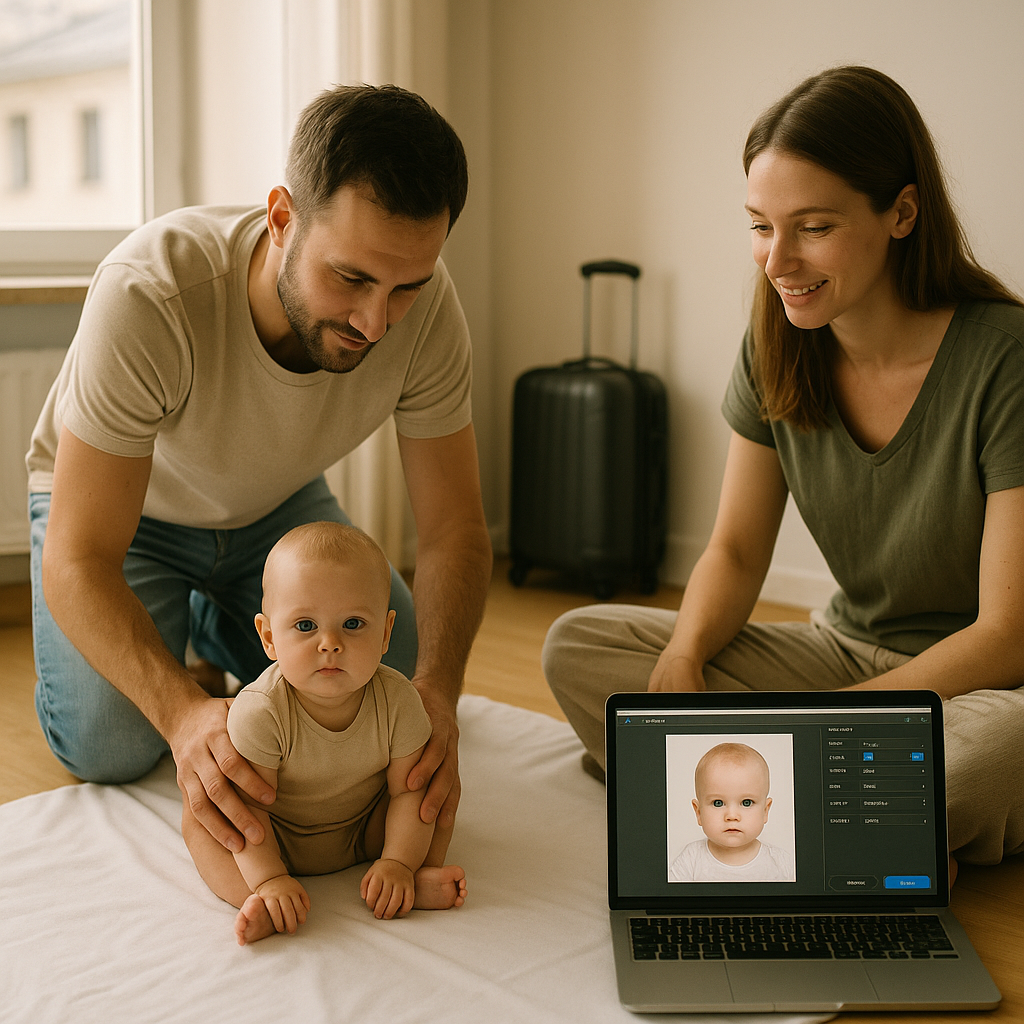
Living abroad sounds glamorous until paperwork enters the chat. Suddenly, it’s less beach sunsets and more government forms, embassy visits, and passport requirements that feel oddly specific. For expats and digital nomads with babies, one tiny detail often causes outsized stress - the baby passport photo.
It sounds simple. Take a picture of your child. Submit it. Done. Right?
Not exactly.
Anyone who has tried to get a baby to sit still for more than three seconds knows the challenge. Now add international regulations, lighting rules, background restrictions, and country-specific guidelines. It becomes a mini project.
Why Baby Passport Photos Are So Complicated
Here’s the thing: passport photos for infants follow almost the same strict rules as adult photos. Governments don’t loosen standards just because the subject is six months old and chewing on a sock.
Most countries require:
- A plain white or light background
- Neutral facial expression
- Eyes open and visible
- No shadows on the face or background
- No hands or objects in the frame
- Proper head positioning and size ratio
Now imagine explaining "neutral facial expression" to a toddler who just learned how to squeal at maximum volume.
If you ask many seasoned expat parents, they’ll tell you this - the hardest part of international relocation with a baby isn’t the flight. It’s the documentation.
Unique Challenges for Expats and Digital Nomads
Families living abroad deal with layers of complexity. They might be renewing a passport from overseas. Applying for dual citizenship. Registering a birth abroad. Or managing visas that hinge on having correct identification for every family member - including the smallest one.
Digital nomads face a slightly different issue. They move frequently. They may not have easy access to a trusted photo studio. They’re often working remotely, juggling time zones, childcare, and deadlines.
Finding a reliable place that understands U.S., U.K., Canadian, Australian, or EU baby passport photo standards in a random city halfway across the world? That can feel like hunting for WiFi in the mountains.
Common Problems Parents Run Into
- Local photo studios unfamiliar with foreign passport requirements
- Incorrect photo dimensions for specific countries
- Rejected applications due to shadows or improper head positioning
- Delays that impact visa renewals or travel plans
- Stress. Lots of it.
And here’s the kicker - one rejected photo can delay everything. Travel plans. Residency permits. Even access to healthcare systems in some regions.
Why DIY Baby Passport Photos Often Fail
At first glance, taking the photo at home seems smart. Smartphones today are powerful. The lighting seems fine. The baby is in a good mood. Snap.
But passport standards are precise. It’s not about whether the baby looks adorable. It’s about measurable details.
The head must occupy a specific percentage of the frame. The background must be evenly lit. No color tinting. No digital smoothing. No red-eye.
Even something small - like a faint shadow behind the ear - can lead to rejection.
Many parents attempt the classic trick: lay the baby on a white sheet and photograph from above. Clever? Yes. Compliant? Sometimes. The sheet wrinkles. Shadows appear. The baby turns sideways. Another attempt. And another.
After 40 photos, everyone is tired.
The Smarter Solution for Mobile Families
This is where online passport photo services designed specifically for babies make a huge difference.
Services like BabyPassportMaker.com focus on infant passport photos that meet country-specific requirements. Instead of guessing, parents upload a photo taken at home. The service adjusts dimensions, verifies compliance, and ensures the final image meets official standards.
It’s the difference between cutting your own hair and going to a specialist. Sure, you could try. But do you want to?
What Makes an Online Baby Passport Photo Service Valuable?
- Automatic resizing to country-specific dimensions
- Background correction to meet official guidelines
- Head size and positioning adjustments
- Expert review before final delivery
- Digital and printable formats ready for submission
For expats managing paperwork across borders, that reliability is gold.
Country-Specific Requirements Matter - A Lot
Not all passport photos are created equal. The U.S. has different size and composition rules compared to the U.K. Canada has its own specifications. Some countries allow slight variations in infant expressions. Others are strict.
For example:
- U.S. baby passport photo size is 2 x 2 inches
- U.K. passport photos use 35mm x 45mm dimensions
- Background color tolerance varies slightly by country
- Some embassies have updated digital submission rules
When families move frequently, it’s easy to confuse requirements. Submitting the wrong format can reset the entire process.
And when residency visas depend on that passport arriving on time? Mistakes become expensive.
Practical Tips for Taking a Baby Passport Photo at Home
Even when using a professional online service, parents still need a good starting image. Here are practical tips that actually work.
1. Use Natural Light
Position the baby near a window with soft daylight. Avoid direct sunlight. It creates harsh shadows.
2. Keep the Background Plain
A smooth white sheet works better than textured walls. Make sure it’s pulled tight to avoid folds.
3. Lay the Baby Down Safely
Place the baby flat on their back. Stand directly above to keep the angle straight.
4. Remove Accessories
No hats. No headbands. No pacifiers. Even cute ones.
5. Be Patient
Take multiple shots quickly. Babies change expressions fast. Capture several options in one short session.
Sounds manageable, right? It is - with the right support afterward.
Why Timing Matters for Digital Nomad Families
Digital nomads often operate on tight schedules. Flights booked. Rentals confirmed. Visas pending. They don’t have weeks to correct rejected applications.
When families rely on international mobility for income and lifestyle, documentation isn’t just paperwork. It’s infrastructure.
A baby passport photo becomes a small but critical cog in a much larger machine. If that cog fails, the whole system stutters.
That’s why efficient, compliant solutions matter. Not because taking a photo is hard. But because the consequences of getting it wrong are inconvenient at best, disruptive at worst.
The Emotional Side No One Talks About
There’s also something oddly emotional about baby passport photos.
It’s often a child’s first official document. The first tiny image that says, “This human belongs to the world.”
For expat families building lives across borders, that passport symbolizes freedom. Opportunity. Flexibility.
And yes, responsibility.
Parents want it done correctly. Not rushed. Not rejected. Just smooth.
Choosing the Right Path
So what’s the smartest approach for expats and digital nomads?
- Understand the exact requirements of the issuing country
- Take a clear, well-lit photo at home
- Use a specialized service to ensure compliance
- Double-check embassy submission instructions
- Submit early to avoid last-minute stress
Simple steps. Big impact.
In a lifestyle built around mobility, flexibility, and border-crossing, preparation becomes a quiet superpower. The baby passport photo may seem like a small task, but it plays an outsized role in keeping global families moving smoothly.
Because when your life spans countries, currencies, and time zones, the smallest details deserve serious attention.
And honestly? Getting it right the first time feels really good.