Standard Baby Passport Photo Sizes Worldwide 2026
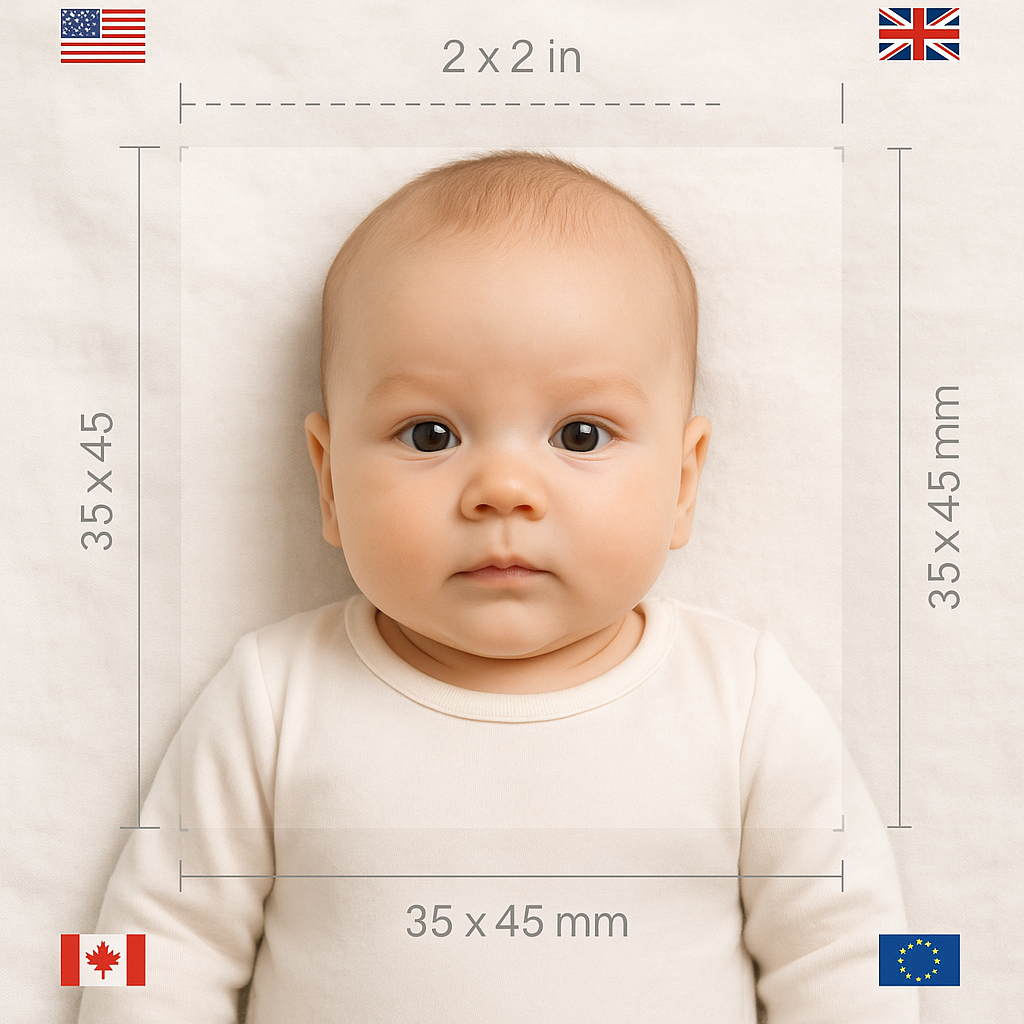
Traveling with a baby sounds adorable. Tiny socks. Oversized sun hats. That first stamp in a brand-new passport. But here’s the part most parents don’t expect - the passport photo. Yes, that small rectangle can cause surprisingly big headaches. Different countries. Different measurements. Different background rules. And when the subject is a wiggly, unpredictable infant? Things get interesting fast. This guide breaks down standard baby passport photo sizes worldwide for 2026, explains what actually matters, and shows how parents can avoid the most common mistakes. ## Why Baby Passport Photo Size Actually Matters It’s tempting to think, “It’s just a photo. How complicated can it be?” Quite complicated, actually. Passport agencies use strict biometric systems. The dimensions of the photo must align perfectly with their scanning technology. Even a millimeter off can result in rejection. And no one wants travel plans delayed because the baby’s photo was cropped wrong. For infants, the rules are slightly more flexible in terms of expression and posture - but the size requirements? Those are not negotiable. Let’s get specific. ## Standard Baby Passport Photo Sizes by Country - 2026 Below are the most common passport photo dimensions worldwide. These measurements apply to babies unless otherwise noted. ### United States - Size: 2 x 2 inches (51 x 51 mm) - Head size: 1 - 1 3/8 inches from chin to top of head - Background: Plain white - Expression: Eyes open (as much as possible), neutral expression The U.S. is strict about square formatting. The head must be centered and properly scaled. No shadows. No props. No visible hands from parents. ### United Kingdom - Size: 35 x 45 mm - Head height: 29 - 34 mm - Background: Light grey or cream The UK format is rectangular, not square. That detail alone trips people up constantly. ### Canada - Size: 50 x 70 mm - Head size: Between 31 - 36 mm - Background: Plain white or light-colored - Photographer stamp required on back (if printed) Canada’s format is noticeably taller than many other countries. Submitting a U.S.-sized image? Immediate rejection. ### Australia - Size: 35 x 45 mm - Background: Plain white - Head centered and fully visible Australia follows a similar format to the UK in dimensions, but background must be pure white. ### European Union (Schengen Countries) Most EU countries follow this standard: - Size: 35 x 45 mm - Background: Light grey or white - Neutral expression That includes Germany, France, Italy, Spain, and many others. However, subtle national variations exist in background tone and cropping precision. ### India - Size: 2 x 2 inches (51 x 51 mm) - Background: White - Face coverage: 70 - 80% of frame India uses square dimensions similar to the U.S., but framing guidelines differ slightly. ### New Zealand - Size: 35 x 45 mm - Head size: 32 - 36 mm - Background: Plain light color Again, rectangular formatting. ## Why So Many Different Passport Photo Sizes? It feels unnecessarily complicated, doesn’t it? Each country developed its biometric system independently. Think of it like electrical outlets around the world - same purpose, different design. Passport photos follow the same logic. Some nations prioritize facial ratio. Others emphasize head-to-frame percentage. A few require exact millimeter spacing from crown to chin. Uniformity would be convenient. Reality says otherwise. ## Common Mistakes Parents Make With Baby Passport Photos Here’s where things often go sideways. ### 1. Using the Wrong Dimensions Parents assume all passport photos are 2 x 2 inches. Not true. Rectangular formats dominate globally. Submitting the wrong size is the fastest way to get rejected. ### 2. Poor Cropping Cropping a baby photo is tricky. Too zoomed out? Rejected. Too close? Rejected. The head must fall within precise measurement ranges. It’s not about aesthetics. It’s about biometric alignment. ### 3. Background Problems Cream instead of white. Slight shadows. Wrinkles in a bedsheet backdrop. Agencies notice. Software notices even more. ### 4. Visible Support Hands Parents often hold infants upright. Totally understandable. But hands cannot appear in the final image. They must be digitally removed or avoided entirely. ### 5. Incorrect File Resolution for Online Applications Many countries now require digital uploads. Typical digital specifications include: - 600 x 600 pixels (U.S.) - JPEG format - File size under specific KB limits - sRGB color space Uploading the wrong resolution leads to automatic system rejection. ## How to Get the Correct Baby Passport Photo Size in 2026 Here’s the smart approach. Instead of guessing or manually resizing images, parents increasingly use dedicated online services built for passport compliance. One example is BabyPassportMaker.com, which automatically formats photos according to country-specific passport standards. The platform adjusts dimensions, head ratio, background correction, and cropping based on the selected country. It removes the trial-and-error frustration. And let’s be honest - photographing a baby is already hard enough. ## Tips for Taking a Compliant Baby Passport Photo Even with proper sizing tools, the original image matters. ### Lighting Is Everything Soft natural light works best. Position the baby facing a window. Avoid harsh overhead shadows. Imagine lighting a tiny portrait session. Gentle. Even. Clean. ### Use a Plain Background A smooth white blanket laid flat works well. Make sure there are no folds creating shadows. Texture equals trouble. ### Keep Baby Centered Lay the baby down if necessary. Photograph from above. Ensure: - Head is straight - Eyes are visible - Mouth closed if possible - No pacifier Perfect expression isn’t required for newborns, but the face must be clearly visible. ### High Resolution Camera Smartphones today are more than capable. Just ensure: - No filters - No portrait blur mode - No beauty enhancements Natural is the goal. ## Printed vs Digital - What’s Changing in 2026? More governments now accept online applications with digital image uploads. That means: - Exact pixel dimensions matter more - Background must pass automated screening - Cropping accuracy is non-negotiable Printed photos still exist, especially for in-person applications. But digital compliance is rapidly becoming the dominant requirement. It’s a shift similar to boarding passes moving from paper to phones. Same function. New format. ## Quick Reference - Most Common Baby Passport Photo Sizes Here’s a simplified cheat sheet: 1. 2 x 2 inches - United States, India 2. 35 x 45 mm - UK, EU, Australia, New Zealand 3. 50 x 70 mm - Canada Always confirm official requirements before submission. Countries update specifications occasionally. ## Final Thoughts on Baby Passport Photo Sizes Worldwide 2026 Getting a baby passport photo right isn’t glamorous. It won’t make anyone’s highlight reel. But it matters. Correct dimensions. Proper head ratio. Clean background. Accurate formatting. Those details quietly determine whether travel plans move forward or stall. And here’s the honest truth - most rejections happen because parents assume the standards are universal. They’re not. Treat passport sizing like baking measurements. A teaspoon too much salt changes the entire recipe. A few millimeters off changes the approval outcome. Double-check country rules. Use proper formatting tools. Capture a clean, well-lit image. Do that, and the tiny passport photo becomes just another small task completed - not a bureaucratic roadblock standing between a baby and their first adventure abroad. Because really, who wants paperwork drama when there’s a world waiting to be explored?