Taking Newborn Passport Photos While They Sleep
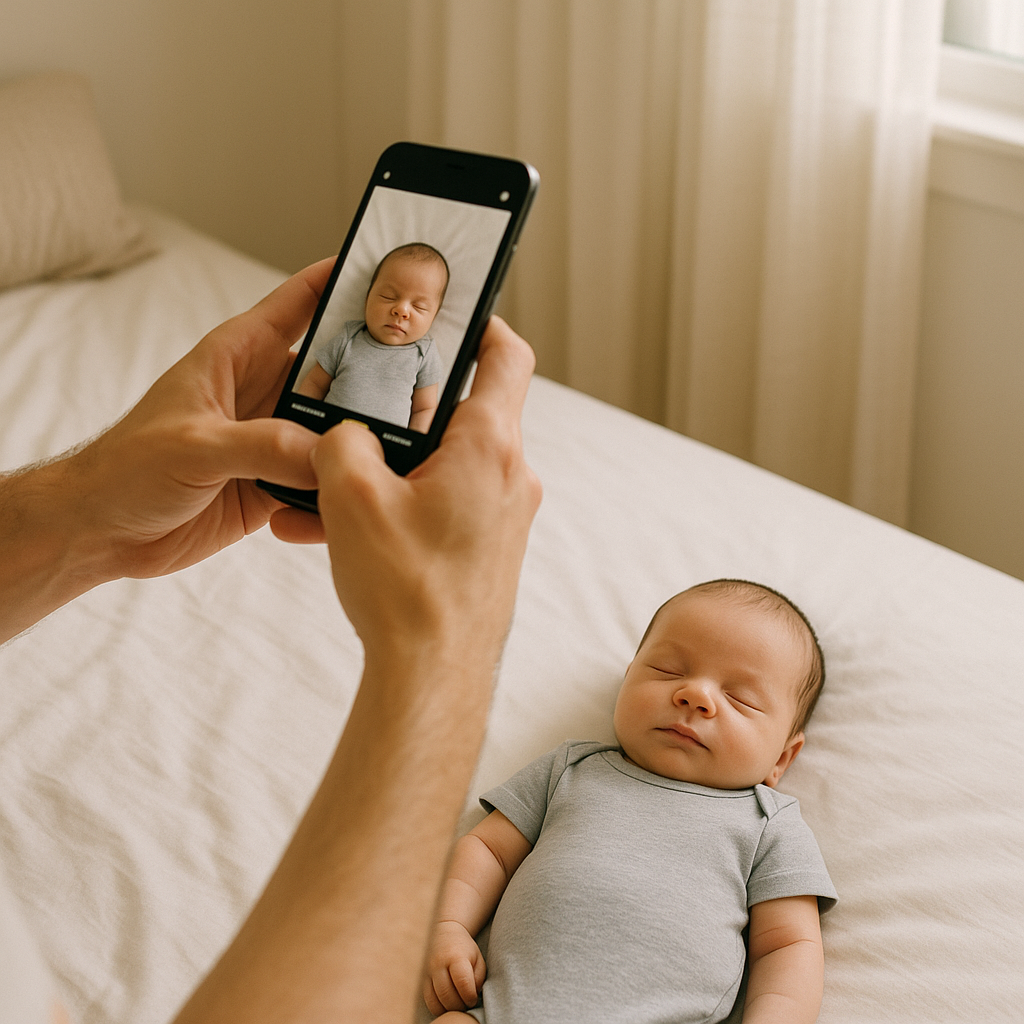
There is a special kind of chaos that arrives the moment someone says, “We should get the baby’s passport sorted.” Everyone nods like it’s a normal errand - like picking up toothpaste. Then reality shows up. Newborns don’t sit. They don’t “look at the camera.” They also have the emotional range of a tiny opera singer who can go from angel to outrage in half a breath.
So here’s the move that quietly saves a lot of families: take the newborn passport photo while the baby sleeps.
It sounds almost too easy, right? A sleeping baby, calm face, no flailing arms. A tiny person who, for five blessed minutes, isn’t trying to karate-kick the air. Honestly, it’s one of the few times newborn photography gets simpler instead of harder.
This post walks through how people can take newborn passport photos while they sleep - without turning it into a two-hour saga. It’s practical. It’s a little opinionated. And it’s written for real life, not some spotless studio fantasy.
Why a Sleeping Baby Is the Passport Photo “Cheat Code”
If you ask him, a newborn believes rules are optional. Passport photo rules are not. Different countries vary, but the general expectations stay annoyingly consistent: clear face, neutral expression, no hands in frame, correct background, no shadows, and no weird angles.
That’s basically asking a newborn to pose like a tiny adult. Which… come on.
Sleep turns the whole situation into something manageable. Think of it like trying to pack a suitcase while someone keeps tossing socks back into the drawer. Once the sock-thrower falls asleep, progress happens.
What “Good Enough” Actually Means for Newborn Passport Photos
Here’s a hot take: “perfect” is the enemy of “approved.” Newborn passport photos do not need to look like an art print. They need to match the required specs and be clear. That’s it.
Most guidelines boil down to a few basics:
- Face fully visible (forehead to chin, both cheeks showing)
- Eyes open is often required for older kids, but newborns sometimes get flexibility depending on the issuing authority
- No pacifier, no hands, no blanket covering the face
- Even lighting - no dramatic shadow across the nose
- Plain background (usually white or off-white)
Parents should still verify the rules for their destination country, because “passport standards” are like recipe instructions - everyone claims theirs are the universal truth.
Setting Up the Shot (Without Making It Weird)
Newborn passport photos work best when the setup is simple. Overcomplicating it is how people end up sweating under a ring light while the baby wakes up and chooses violence. Keep it calm.
Pick the Right Spot in the House
Natural light wins. A bright window with indirect light is the sweet spot. Direct sun creates harsh shadows and that squinty, blown-out look. Nobody wants the baby looking like they’re auditioning for a spaghetti western.
Good locations:
- Near a window with sheer curtains
- A room where daylight feels soft and even
- Anywhere you can keep the background clean
Avoid:
- Overhead yellow lights (they tint skin tones fast)
- Flash (it’s harsh and can startle them)
- Busy backgrounds - patterns, pillows, random laundry piles
Make a Clean, Passport-Friendly Background
A plain white sheet or a light blanket works. The trick is to smooth it out so it doesn’t look like the baby is floating through a crumpled cloud.
Some households use a firm mattress with a white sheet pulled tight. Others use a bassinet insert. Either can work, as long as the background looks uniform and the baby’s head stays supported safely.
Safety comes first. Always. The photo is not worth a risky setup.
Timing It: How to Catch the Sleep Window
Most newborns have that post-feed drowsiness. That’s the moment. Not when they’re half-asleep and twitchy, not when they’re hungry and offended. After feeding, after a burp, when the eyelids get heavy.
Sounds simple. But the timing matters.
A Practical Checklist Before Taking the Photo
- Feed the baby (or at least make sure hunger isn’t the current crisis)
- Change the diaper (reduce surprise wake-ups)
- Wait until the baby is fully asleep - limp arms, relaxed face
- Prepare the background and phone beforehand
Doing setup first is key. Scrambling for a white sheet while the baby drifts off is like trying to find keys while the taxi is already honking outside.
How to Position a Sleeping Newborn for a Passport Photo
Passport photos usually require a straight-on view. No tilt. No “cute angle.” That’s the part that trips people up.
The baby’s head should face up, with the camera directly above (but not too close). The face needs to appear centered, with a little space around the head and shoulders so the crop can be adjusted later.
What to Do With Those Tiny Hands
Newborns love bringing hands to their face at the worst time. If the baby sleeps with hands up, parents can gently lower them - slowly - and wait. If the baby pops them back up, take a breath and try again.
No forcing. No wrestling match. Just calm, gentle adjustments. If it doesn’t work, pause and try later.
Lighting: The Difference Between “Accepted” and “Rejected”
If there’s one reason passport photos fail, it’s lighting. Shadows around the nose, dark areas under the chin, bright glare on the forehead. Those tiny details matter more than people expect.
Even light is the goal. Think of it like butter on toast - you want coverage everywhere, not one big lump in the middle.
Quick Lighting Fixes That Actually Help
- Turn the baby’s head slightly toward the window, not away from it
- Use a white wall or white sheet opposite the window to bounce light back
- Step back and zoom slightly (reduces distortion on the face)
And yes, phone cameras can do this just fine. Most modern phones are surprisingly good when the light behaves.
Taking the Photo: Simple Steps, Minimal Drama
When the baby is asleep and positioned well, the photo-taking part should be quick. The longer it goes on, the higher the chance the baby wakes up and the whole plan evaporates.
A No-Nonsense Shooting Routine
- Clean the phone lens (seriously - it matters)
- Hold the camera directly above, parallel to the baby’s face
- Tap to focus on the face
- Take 10-20 photos in a row
- Check quickly for shadows and hands
Take more shots than you think you need. Digital photos are free. Re-doing the entire setup is not.
Common Mistakes That Get Newborn Passport Photos Rejected
Some rejections feel petty, but that’s passport processing for you. The rules are the rules, even when the subject weighs eight pounds.
- Shadows on the background - move closer to the window or change angle
- Blanket folds behind the head - smooth it out, pull it tight
- Head not centered - adjust framing so there’s room to crop
- Face slightly turned - straight-on is safer than “almost” straight
- Low resolution - don’t use screenshots or heavily compressed images
Also, avoid heavy filters. This is not the time for “warm glow” presets. Passport offices like reality, not vibes.
Using a Tool to Get the Size and Specs Right
Here’s where people often get stuck: even if the photo looks good, it still needs the right dimensions, correct crop, and proper formatting. That’s the annoying part - like baking a cake successfully, then realizing you need to cut it into an exact square to pass inspection.
This is why some parents use online services that guide the crop and export the correct file. One option is BabyPassportMaker.com, which is built around baby passport photo needs - meaning it’s not assuming the subject can sit still or follow instructions. It helps families turn a decent phone photo into a print-ready, requirement-friendly passport image.
Less guessing. Less resizing confusion. Fewer late-night arguments about millimeters.
FAQ: Real Questions Parents Ask (Because Of Course They Do)
Can a newborn have eyes closed in a passport photo?
It depends on the country. Some authorities allow closed eyes for infants, others don’t. Parents should check the specific rules for the passport they’re applying for. When in doubt, try for a lightly drowsy moment with eyes open - but yes, that’s easier said than done.
What should the baby wear?
Plain clothing is best. Solid colors. No big patterns, no hoods, no hats. If the background is white, choose a slightly darker outfit so the baby’s chin and shoulders don’t disappear.
Is it okay to take the photo in a car seat?
Usually not ideal. The seat creates shadows and the angle tends to tilt the head back. Passport photos want a clear, straight-on face. A flat, safe surface with a plain background is easier to control.
A Quick “Do This, Not That” Guide
- Do use soft window light - Not that harsh flash
- Do smooth the background - Not that wrinkled blankets
- Do take many shots quickly - Not that a slow, fussy session
- Do keep the camera parallel - Not that angles from the side
- Do leave space to crop - Not that tight framing
Final Thoughts From Someone Who’s Seen This Go Sideways
Taking newborn passport photos while they sleep is not a magic trick, but it’s close. It gives parents the one thing they rarely get in the early weeks: a calm moment with a predictable face.
Keep the setup simple. Chase soft light. Take more photos than feels necessary. And if the formatting part starts to feel like you’re doing taxes with a crying soundtrack, using something like BabyPassportMaker.com can save time and sanity.
Because the goal isn’t to create a masterpiece. The goal is to get that passport approved - and get back to the important stuff. Like sleep. For everyone.