AI Tool for Baby Visa Photo Compliance Check
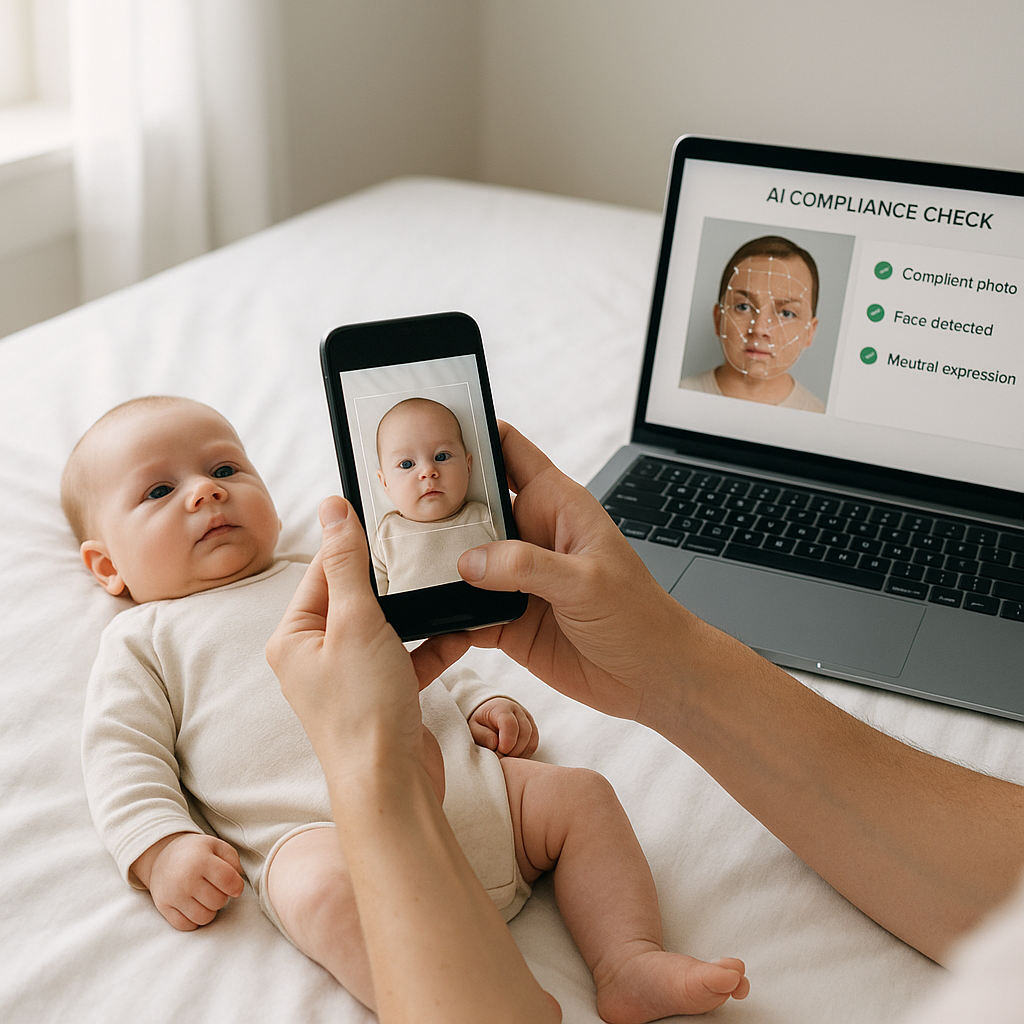
Getting a visa photo for a baby sounds simple. Snap a picture. Upload it. Done.
If only.
Anyone who has tried to photograph an infant for official documents knows the truth - it is more like negotiating with a tiny, unpredictable CEO who refuses to sit still. Eyes closed. Head tilted. Random shadow across the face. A rogue pacifier making a cameo appearance. And then comes the worst part: finding out the photo does not meet visa requirements.
That is exactly where an AI tool for baby visa photo compliance check changes the game.
Why Baby Visa Photos Are So Hard to Get Right
Visa photo rules are strict. Not “kind of strict.” Strict, strict.
Governments demand:
- Exact head size proportions
- Neutral facial expression
- Eyes fully open
- Plain white or light background
- No shadows
- No other visible objects or hands
Now imagine applying those rules to a three-month-old. Sounds simple, right?
Babies do not understand "neutral expression." They blink at the worst moment. They lean. They wiggle. And even if everything looks fine to the parent, an embassy’s automated system might reject it in seconds.
That rejection costs time. Sometimes money. Occasionally, travel plans.
What Is an AI Tool for Baby Visa Photo Compliance Check?
At its core, this type of AI tool scans a baby’s photo and evaluates whether it meets official visa or passport standards. Think of it as a hyper-detail-oriented inspector who never gets tired and never misses a pixel.
Instead of guessing whether the lighting is acceptable or the head size ratio fits within the required range, the system analyzes:
- Facial positioning
- Eye visibility
- Head alignment
- Background consistency
- Image resolution and dimensions
In seconds, parents know if the image passes - or needs adjustment.
Honestly, that kind of clarity feels like a breath of fresh air.
How AI Actually Detects Compliance Issues
Here is where it gets interesting.
1. Facial Recognition Mapping
The system maps key facial points - eyes, nose, chin, crown of the head. It measures spacing and proportion against official biometric standards. Too much tilt? It flags it. Eyes partially closed? Flag.
2. Background Analysis
Even a faint shadow can trigger rejection. AI evaluates pixel contrast and uniformity across the backdrop. If the white wall behind the baby fades into gray on one side, the system notices.
3. Lighting Evaluation
Uneven lighting creates subtle facial shadows. Parents might not spot them. AI does. It checks brightness balance across the image like a digital quality inspector.
4. Size and Cropping Accuracy
Different countries require specific dimensions. The AI ensures the head occupies the correct percentage of the frame. Not too big. Not too small. Just right - like a biometric Goldilocks zone.
Why Parents Are Turning to AI Instead of Photo Studios
Here’s a hot take: traditional studios are not always baby-friendly.
Some photographers are fantastic. Others rush the session, snap a few shots, and print whatever looks “close enough.” The problem? “Close enough” does not work with immigration systems.
Parents increasingly prefer AI-based platforms like BabyPassportMaker.com because they offer:
- Instant compliance checks
- Country-specific photo formatting
- Automatic background correction
- Digital delivery ready for online submission
No car ride. No waiting room. No stressed baby under studio lights.
Just a smartphone and a few minutes at home.
The Emotional Side No One Talks About
Travel with a baby already feels like planning a moon mission. Documents, medical supplies, feeding schedules, naps - everything must align perfectly.
When a visa photo gets rejected, it is not just an inconvenience. It feels like hitting a wall after already juggling too much.
An AI compliance tool removes that uncertainty. It answers the quiet question in every parent’s mind: “Will this be accepted?”
That reassurance matters.
Common Reasons Baby Visa Photos Get Rejected
Many parents assume rejection only happens because of obvious mistakes. Not true. Sometimes it is something surprisingly small.
Frequent issues include:
- Baby looking slightly off-camera
- Visible parental hands supporting the head
- Shadow under the chin
- Overexposed lighting washing out facial features
- Incorrect image resolution
- Improper head size ratio
Without a compliance check tool, these details slip through.
How to Take a Better Baby Visa Photo at Home
Even with AI assistance, starting with a strong photo helps.
Simple Practical Tips
- Lay the baby flat on a plain white sheet
- Use natural daylight near a window
- Avoid overhead lights that create shadows
- Remove pacifiers, hats, and hair accessories
- Take multiple shots in quick succession
Then upload the best image to an AI compliance checker. Let the system do the technical evaluation while parents focus on soothing the baby.
Efficiency meets sanity.
Is AI Reliable for Official Visa Photo Approval?
This is the big question, isn’t it?
Modern AI photo validation tools are trained on government biometric standards. They replicate the checks performed by official systems. While no tool can guarantee approval - because final decisions always rest with authorities - using AI dramatically reduces the risk of rejection.
Think of it like proofreading before submitting an important exam. Could mistakes still happen? Possibly. But the odds shrink significantly.
The SEO Reality - Why This Tool Is Gaining Popularity
Search trends show growing interest in terms like:
- baby visa photo checker
- AI passport photo for newborn
- baby passport photo compliance tool
- online visa photo validation
Why the surge?
Because more visa applications are submitted online. Digital uploads mean automated screening. Automated screening means precision matters more than ever.
AI compliance tools fit naturally into this digital-first process.
What Makes BabyPassportMaker.com Stand Out
Among various platforms, BabyPassportMaker.com focuses specifically on infant and child document photos. That niche focus matters.
Instead of treating baby images like scaled-down adult photos, the system accounts for real-world parenting challenges. It adapts cropping, refines backgrounds, and validates measurements based on country-specific requirements.
The experience feels tailored. Not generic.
And when dealing with immigration paperwork, tailored solutions beat one-size-fits-all every time.
Final Thoughts - Because Parents Deserve Easier Solutions
Technology often complicates life. More apps. More passwords. More steps.
This is one of those rare cases where technology simplifies something genuinely stressful.
An AI tool for baby visa photo compliance check removes guesswork. It saves time. It reduces rejection risk. It supports families navigating already complex travel requirements.
And if you ask many parents, that peace of mind is worth far more than the cost of a quick digital scan.
Because when preparing for international travel with a baby, fewer surprises make all the difference.