Baby Passport Photo Head Height Requirements Guide
Getting a passport photo for a baby sounds simple. It isn’t. Anyone who has tried to photograph an adult for official documents knows the drill - neutral face, straight posture, proper lighting. Now imagine asking a six-month-old to do that. Exactly. One of the biggest stumbling blocks? Baby passport photo head height requirements. It’s a tiny detail that causes outsized headaches. Parents often focus on getting the baby to sit still, but the real challenge hides in the measurements. Let’s break it down clearly, practically, and without the usual bureaucratic fog.
Why Head Height Matters in Baby Passport Photos
Passport agencies are picky. Not because they enjoy it - but because biometric systems rely on precise proportions. Head height, in simple terms, is the measurement from the bottom of the chin to the top of the head. That includes hair. Yes, even the fluffy baby fuzz. Why so exact? Because facial recognition software compares ratios. If the head is too small, too large, or oddly positioned, the system struggles. Think of it like scanning a barcode. If the barcode is stretched or shrunk, the scanner hesitates. And no one wants a rejected passport application because the baby’s head measured 1 millimeter off.
Official Baby Passport Photo Head Height Requirements
Requirements vary slightly by country, but the core standards remain consistent. Here’s what most passport authorities require:
For U.S. Baby Passport Photos
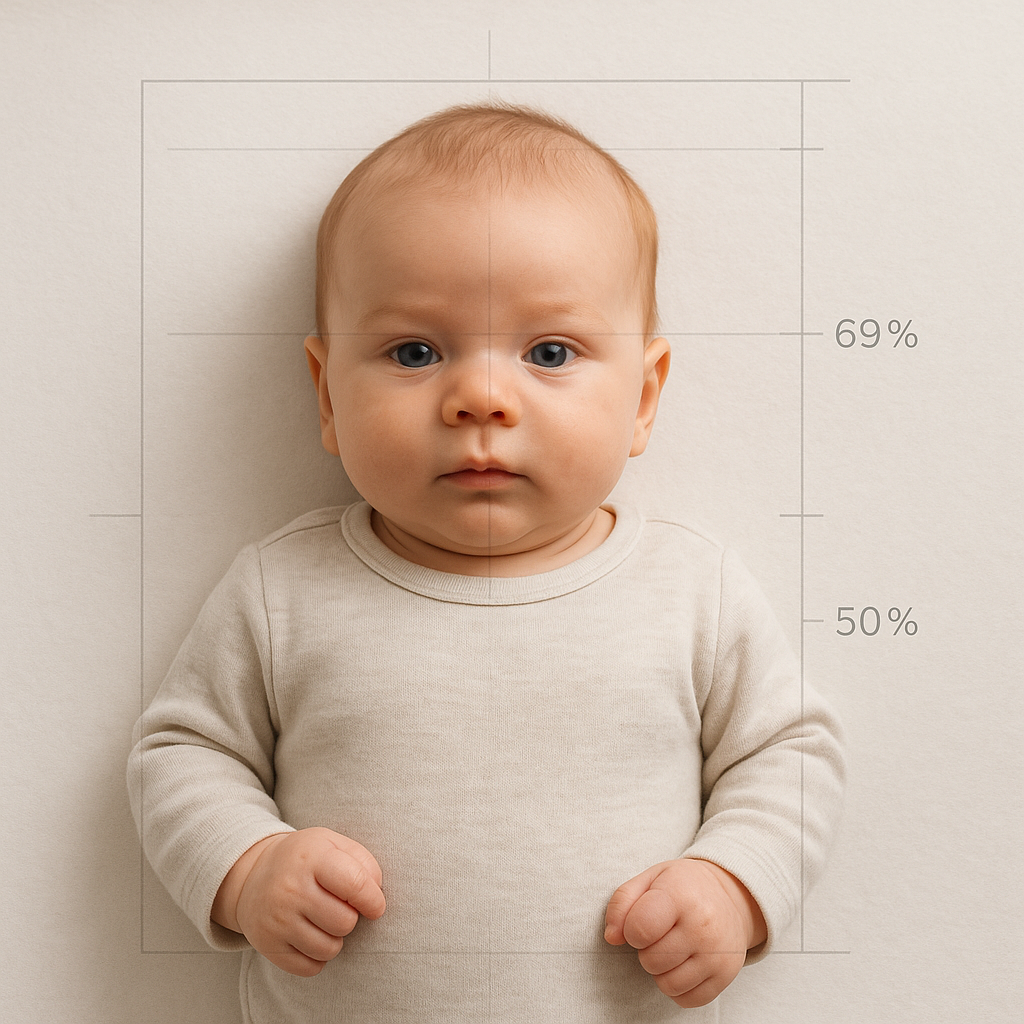
- Photo size must be 2 x 2 inches (51 x 51 mm) - Head height must measure between 1 inch and 1 3/8 inches (25 mm - 35 mm) - The head must occupy 50% to 69% of the total photo height - Baby must face the camera directly - Eyes should be open (if possible - newborn exceptions sometimes apply) Sounds simple, right? In practice, getting that perfect 25 mm to 35 mm head measurement while your baby is mid-wiggle feels like measuring jelly with a ruler.
For UK Baby Passport Photos
- Photo size: 35 mm x 45 mm - Head height must measure between 29 mm and 34 mm - Head must fill 70% to 80% of the photo vertically Subtle difference. Big impact. That’s why blindly resizing photos without understanding head height requirements can lead to automatic rejection.
Common Mistakes Parents Make
Honestly, most rejections come from completely avoidable errors. Here’s what tends to go wrong:
1. Head Too Small
Parents stand too far away when taking the photo. The baby looks adorable, centered, with lots of background space. Unfortunately, passport offices don’t grade on cuteness. If the head doesn’t occupy the required percentage of the image, it’s rejected.
2. Cropping Without Measuring
Cropping by “eye feel” rarely works. It might look proportional, but if the chin-to-crown distance isn’t within the required millimeters, it won’t pass biometric checks.
3. Tilting or Angled Heads
Babies love to tilt. They also love to slump. A tilted head can distort vertical measurements, making the head appear shorter than it actually is.
4. Too Much Space Above the Head
There must be space above the head - but not too much. Too much empty background reduces the head’s percentage in the frame. It’s a balancing act.
How to Measure Baby Head Height Correctly
Let’s make this practical. To measure correctly:
- Open the image in a photo editing tool that shows pixel dimensions.
- Measure the total height of the image in pixels.
- Measure from the bottom of the baby’s chin to the top of the head in pixels.
- Divide head height by total image height.
- Convert that ratio into percentage.
Example: If the total image height is 1000 pixels and the baby’s head measures 600 pixels, the head occupies 60% of the image. That fits within the U.S. requirement of 50% - 69%. See? Not complicated. Just precise.
Lighting and Positioning - The Hidden Factors
Head height isn’t just about cropping. Lighting and angle influence perception. Shadows under the chin can visually shorten the head measurement. Harsh overhead light creates distortion. The baby should: - Face the camera directly - Keep head centered - Avoid leaning forward or backward - Sit upright if possible (or lie flat on a white sheet for newborns) A flat white blanket works surprisingly well for infants who can’t sit yet.
Should Parents Use Professional Services?
Here’s a hot take: trying to DIY baby passport photos without understanding head height requirements often costs more time than it saves. Rejections mean: - Delayed travel plans - Re-submission fees - Frustration - More photo attempts with an increasingly annoyed baby That’s why many parents turn to specialized services like BabyPassportMaker.com. These platforms automatically adjust head size, verify measurements, and ensure compliance with official passport photo head height requirements. It removes the guesswork. And when you’re juggling naps, feeding schedules, and paperwork? Guesswork is the last thing anyone needs.
Tips to Get Baby Passport Head Height Right the First Time
Let’s make this actionable.
1. Use a Neutral Background
White or off-white. No textures. No shadows. Patterned backgrounds confuse automatic cropping tools.
2. Position the Camera at Eye Level
Not above. Not below. Shooting from above can distort proportions, making the head appear larger or oddly shaped.
3. Fill the Frame Properly
Get close enough so the baby’s head already occupies a significant portion of the frame before cropping. Think zoom with your feet, not digital zoom.
4. Take Multiple Shots
Babies blink. A lot. Capture several images to ensure at least one has open eyes, neutral expression, and centered alignment.
5. Double-Check Measurements Before Printing
Print only after confirming millimeter requirements. Printing and reprinting wastes time and money.
What About Newborn Exceptions?
Good question. Some countries allow minor flexibility for newborns, especially regarding eye openness and expression. However, head height requirements typically still apply. That’s the non-negotiable element. Even if the baby’s eyes are slightly closed, the chin-to-crown measurement must fall within the required range.
Why Precision Beats Perfection
Parents often stress about getting the “perfect” baby photo. But passport offices don’t care about adorable smiles or symmetrical lighting. They care about compliance. Think of it like baking with exact measurements. Add too much flour and the cake collapses. Too little and it’s gooey. The recipe works only when proportions align. Passport photo head height is the flour measurement of this entire process. Miss it - and the whole thing falls apart.
Final Thoughts on Baby Passport Photo Head Height Requirements
Getting a baby passport photo approved isn’t about luck. It’s about understanding ratios, respecting millimeter rules, and ensuring the head occupies the correct percentage of the frame. Parents who approach this casually often face rejection. Those who measure carefully - or use tools designed for compliance - move through the process smoothly. It comes down to this: - Know the required head height range - Measure precisely - Avoid tilting or distortion - Verify before submitting Do that, and the passport photo becomes one less thing to worry about. And with a baby in the house, reducing even one source of stress feels like a small victory. Sometimes that’s more than enough.