Baby Passport Photo Glossy vs Matte Paper
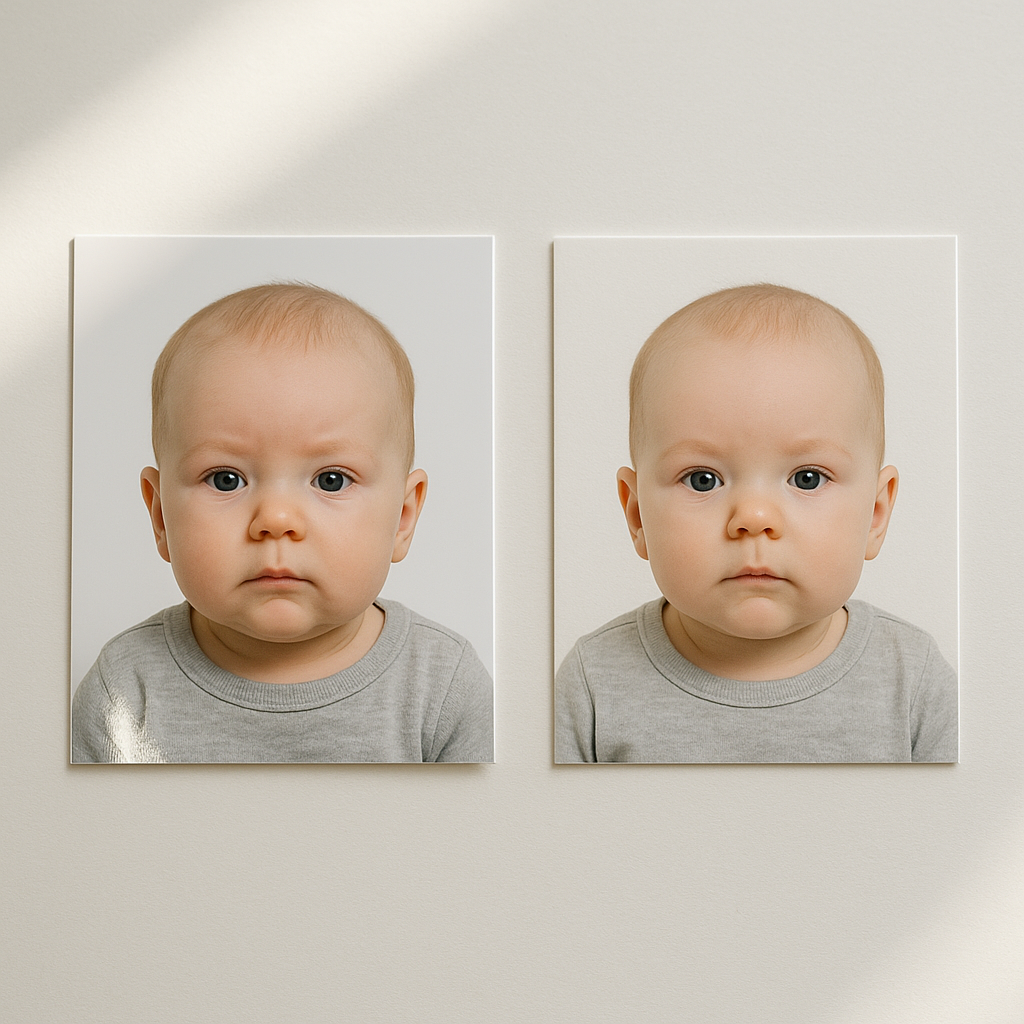
Choosing the right paper for a baby passport photo sounds trivial. It isn’t. One small decision - glossy or matte - can quietly determine whether that application glides through or comes back stamped with a frustrating rejection notice. Parents already juggle nap schedules, snack emergencies, and the mysterious disappearance of one tiny sock. The last thing anyone needs is a passport photo issue. So, glossy vs matte for a baby passport photo - which actually works better? Let’s break it down in a way that makes sense.
Why Paper Type Even Matters for Baby Passport Photos
On the surface, paper finish feels cosmetic. Shiny versus non-shiny. Simple, right? Not exactly. Passport agencies use scanners. Those scanners read facial features, shadows, contrast, and fine details. The wrong finish can create glare, soften definition, or slightly distort how light interacts with the baby’s face. For adults, that’s already important. For infants - whose features are smaller and subtler - it’s even more critical. A baby’s photo must clearly show:
- Eyes open and visible
- Neutral expression
- No shadows across the face
- Accurate skin tone
- Proper contrast against a plain background
Paper finish plays a bigger role in this than most people realize.
Glossy Paper for Baby Passport Photos
Glossy paper is smooth, reflective, and vibrant. It’s the type most people associate with traditional photo prints.
Pros of Glossy Paper
1. Sharper detail - Glossy tends to enhance fine lines and edges. 2. Rich color depth - Skin tones can appear slightly more vibrant. 3. Professional lab standard - Many photo labs default to glossy. When lighting is balanced correctly, glossy can look crisp and official. It often gives that "studio finish" feel.
Cons of Glossy Paper
Here’s where things get tricky. - Reflective surface can create glare under scanning lights. - Fingerprints show easily - and babies mean fingerprints. - Minor lighting imperfections become more obvious. That glare issue? It’s not dramatic to the naked eye. But under government scanning systems, reflection can wash out small facial details. And with infants, every tiny detail matters.
Matte Paper for Baby Passport Photos
Matte paper has a non-reflective finish. It diffuses light instead of bouncing it back. It feels softer. Slightly textured. Less shiny.
Pros of Matte Paper
- Reduced glare during scanning - Fewer visible fingerprints - More forgiving with lighting - Natural-looking skin tones If glossy is like a polished glass table, matte is more like a smooth wooden surface - steady and understated. For baby passport photos, that subtle softness often works in the parent’s favor.
Cons of Matte Paper
- Slightly less vibrant color - Fine details may appear marginally softer The difference is small, but noticeable when compared side by side.
Official Requirements - What Do Agencies Actually Say?
Most passport authorities specify that photos must be printed on high-quality photo paper. Notice something? They don’t always strictly require glossy. In many cases, both glossy and matte are acceptable - as long as the print:
- Is on professional-grade photo paper
- Has no texture patterns
- Maintains accurate color
- Shows no damage or marks
That flexibility leaves room for choice. And that’s where strategy comes in.
Which Is Better for a Baby Passport Photo?
If someone asks for a straight answer, here’s the honest take: Matte paper is often safer for baby passport photos. Why? Because babies are unpredictable. They wiggle. They drool. They blink at the worst possible second. Lighting isn’t always perfectly controlled, even in a studio. Matte paper compensates for minor lighting inconsistencies and reduces the chance of glare ruining an otherwise perfect shot. Glossy can absolutely work - when lighting is flawless and prints are handled carefully. But matte gives parents a slightly wider margin of error. And with government paperwork, margin matters.
Common Mistakes Parents Make
It’s not usually about choosing glossy or matte. It’s about execution. Here are the most frequent issues:
1. Printing on Regular Paper
Standard printer paper is a fast track to rejection. Passport photos must be printed on photo-grade material.
2. Choosing Textured Matte
Not all matte is created equal. Heavily textured finishes are not acceptable.
3. Ignoring Lighting When Using Glossy
Glossy amplifies flaws. Slight shadow on one cheek? It becomes more pronounced.
4. Handling Without Care
Glossy attracts fingerprints. Matte can still crease. Always store photos flat and protected.
Professional Services vs DIY Printing
Here’s another honest opinion. DIY printing sounds convenient - until calibration, color accuracy, and paper quality enter the picture. Professional services understand compliance rules. They know how contrast should look. They know cropping specifications down to the millimeter. Services like BabyPassportMaker.com specialize in baby passport photos specifically, which removes the guesswork entirely. They ensure the correct sizing, background tone, lighting balance, and print finish. That’s not just convenience. It’s risk reduction. And for many parents, peace of mind is worth more than experimenting with printer settings at midnight.
Glossy vs Matte - Side-by-Side Comparison
Here’s a simplified breakdown:
Glossy
- Shiny, reflective finish
- High contrast
- Sharp detail
- Higher glare risk
- Shows fingerprints easily
Matte
- Non-reflective surface
- Softer visual effect
- Reduced glare
- More forgiving with lighting
- Less prone to visible smudges
When dealing with infant passport photography, forgiveness in lighting and handling tends to win.
Does Paper Finish Affect Processing Time?
Not directly. But indirectly? Yes. If glare or print quality causes rejection, processing resets. That can mean weeks of delay. And if travel plans are already booked, that delay feels enormous. Choosing the right finish from the start reduces that risk.
What Professional Photographers Often Prefer
Many experienced passport photographers lean toward matte for official documentation. Not because glossy is wrong - but because matte minimizes variables. Think of it like choosing tires for wet roads. Both may function, but one handles unpredictable conditions better. Babies are unpredictable conditions.
Final Thoughts on Baby Passport Photo Paper Choice
Glossy paper delivers sharp, vibrant results when everything aligns perfectly. Matte paper offers stability, reduced glare, and fewer handling issues. For baby passport photos specifically, matte often edges ahead as the more practical option. That said, compliance matters more than finish alone. The photo must meet sizing rules, lighting standards, background requirements, and clarity expectations. Parents who want full confidence often turn to specialized providers like BabyPassportMaker.com to eliminate uncertainty altogether. Because when it comes to official documents for a newborn, guessing isn’t ideal. And honestly - anything that makes the process smoother is a win. The glossy vs matte debate may seem small. But in the world of passport approval, small details carry surprising weight.