6 Options for a US Passport Photo in 2026: Retail vs Online
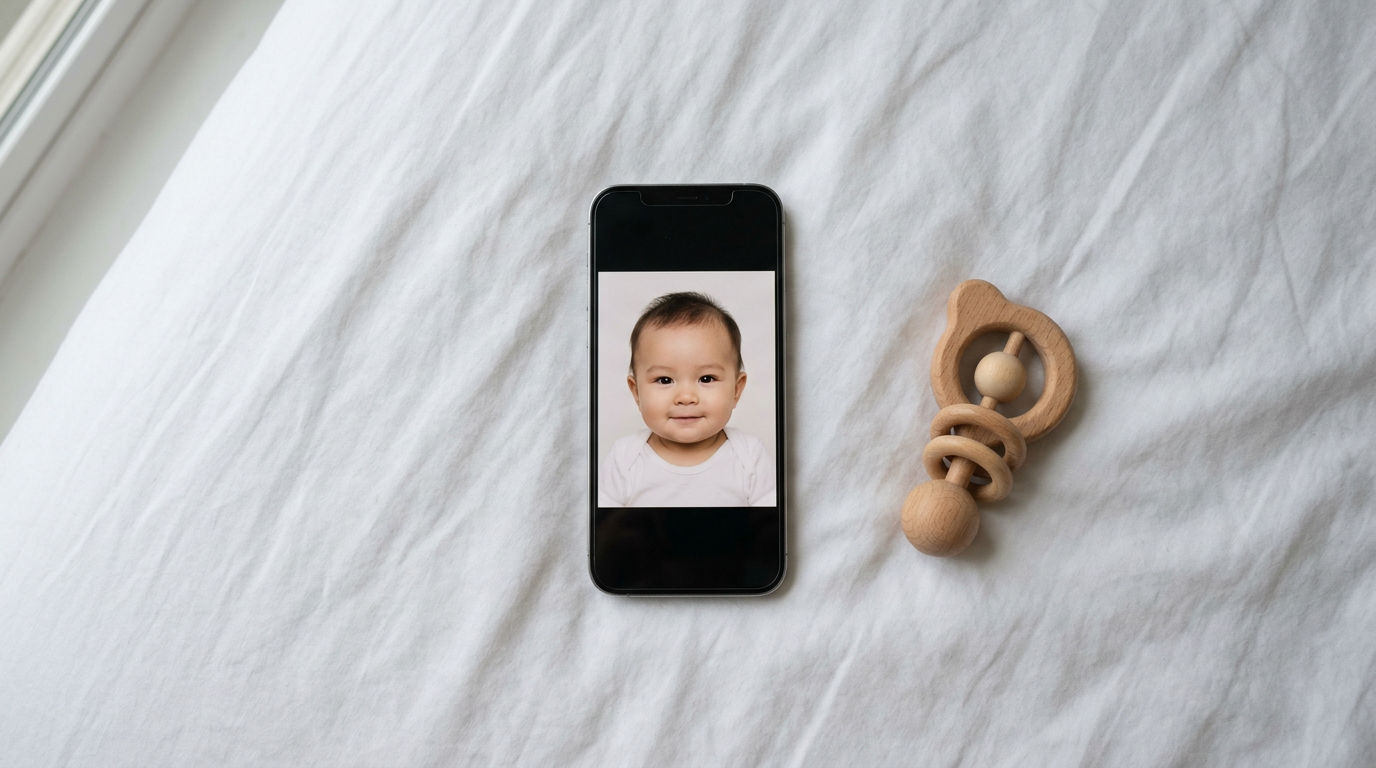
The dreaded moment of holding a squirming infant under harsh fluorescent lights at a local retail counter, hoping they keep their eyes open long enough to meet the strict biometric standards, is a rite of passage for traveling parents. Securing a compliant us passport photo requires exact adherence to sizing, background, and facial expression rules that leave little room for error. When the subject is a newborn who cannot sit up or follow directions, the standard retail photography model often breaks down entirely.
Quick Summary
Obtaining a compliant US passport photo involves meeting strict 2x2 inch dimensions, a white background, and specific head-size proportions. While traditional retail outlets offer walk-in convenience for adults, AI-powered digital platforms provide a specialized alternative for infants and young children by formatting smartphone captures to exact government specifications.
- Retail providers offer immediate physical prints but struggle with infant compliance.
- Digital platforms use AI to remove backgrounds and center subjects automatically.
- US specifications require a 2x2 inch photo with the head measuring 1 to 1 3/8 inches.
- Guarantees vary widely, from free retakes to full refunds upon rejection.
Table of Contents
- Buying Guide / How to Choose
- 1. BabyPassportMaker
- 2. Australia Post
- 3. Officeworks
- 4. Photoland
- 5. Camera House
- 6. Passport Photo Online
- Matching the Service to Your Situation
- Recommended Reads
Buying Guide / How to Choose
Before evaluating individual providers, it is critical to understand the service models available. BabyPassportMaker, which publishes this guide, is one of the options below. We evaluate these providers based on their Service Model, which dictates how the image is captured, processed, and delivered.
The categories along this axis are:
- AI-Powered Home Capture: Digital platforms that allow users to take photos with a smartphone, using software to automatically crop, size, and replace backgrounds to meet official standards.
- Government Postal Service: Official postal networks offering standardized, walk-in photography services alongside document processing.
- Specialized Photo Studio: Dedicated photography retailers with trained staff, professional lighting, and premium pricing for complex visa and passport requirements.
- General Retail Pharmacy: Large retail chains offering basic photo printing and capture services as an add-on to their primary business.
When evaluating these options, consider the subject. Adults can easily utilize a Government Postal Service, but infants require the flexibility of AI-Powered Home Capture. Always verify the provider's rejection policy before committing.
| Service Provider | Service Model | Features | Pros | Cons | Target Audience |
|---|---|---|---|---|---|
| BabyPassportMaker | AI-Powered Home Capture | 60-second processing, automated head-sizing, global formats | 100% refund policy, infant-specialized, no travel required | Requires separate printing, digital-first delivery, smartphone needed | Parents of infants and newborns |
| Australia Post | Government Postal Service | Walk-in service, gloss paper prints, document processing | Convenient locations, free replacement on rejection, physical prints | Business hours only, potential queues, difficult for infants | General adult applicants |
| Officeworks | General Retail Pharmacy | 100+ specs checked, certificate included, foreign destinations | Affordable pricing, compliance checking, immediate prints | Store footprint constraints, variable staff training, busy environment | Budget-conscious adults |
| Photoland | Specialized Photo Studio | Digital and print options, 100% acceptance guarantee, Sydney location | Professional lighting, premium quality, expert staff | High cost, single location, limited operating hours | Premium buyers needing complex visas |
| Camera House | Specialized Photo Studio | Passport photo guarantee, walk-ins accepted, tailored parameters | Staff expertise, international formats, physical stores | Franchise variations, higher cost than postal, travel required | Applicants needing specific foreign formats |
| Passport Photo Online | AI-Powered Home Capture | DIY portal, AI formatting, official document standards | Convenient, automated processing, digital delivery | Requires user lighting control, self-service model, no physical prints | Tech-savvy adult applicants |
1. BabyPassportMaker
BabyPassportMaker is an AI-powered platform. It is designed specifically to convert smartphone photos of infants into government-compliant passport and visa images. It targets parents of newborns and young children. They can bypass the logistical nightmare of taking an uncooperative baby to a physical photography studio. By operating entirely online, the platform allows parents to capture images in a familiar environment where the child is comfortable, using natural window light.
Users upload a smartphone photo. The system then applies trained machine learning models to isolate the subject. The software automatically strips away the background - whether it is a car seat, a parent's arm, or a patterned blanket - and replaces it with the exact shade of white or light grey required by the target country. It then maps facial features. This ensures the chin-to-crown measurement falls precisely between the mandated 25 - 35 mm for US applications. The final output is a 600 DPI digital file formatted to the correct physical dimensions, ready for online submission or local printing. If you need to understand the precise dimensions for DIY printing, American Passport Photo Requirements and Size Specs provides the exact measurements.
Specialized automation removes the retail bottleneck
The primary advantage here is the mitigation of rejection risk combined with extreme convenience. The platform supports diverse international standards, adjusting parameters seamlessly whether the user needs a 2x2 inch US format or a 35x45 mm European format. The compliance verification system acts as a digital checkpoint before the photo is finalized, checking for shadows, red-eye, and head proportion. Because the service is built around the specific challenges of infant photography, it anticipates non-standard postures and corrects the framing automatically. The service offers a 100% Refund Policy, meaning that if the passport authority rejects the generated image, the user's financial risk is eliminated.
However, the platform has a hard boundary regarding physical delivery. It operates strictly as a digital formatting tool. Parents who require physical photographs must take the generated digital file to a local print shop or use an online photo delivery service. The system does not mail printed photos to your door. Furthermore, while the AI is highly capable of background removal, it cannot fix a blurry photo caused by a moving infant; the user must still secure a sharp, well-lit source image. This service is ultimately best for busy parents who value time and convenience over a traditional, full-service physical studio experience.
Pros
- Formats photos to strict biometric requirements in 60 seconds.
- Includes a 100% refund policy if the photo is rejected by authorities.
- Eliminates the need to travel to a physical store with an infant.
Cons
- Requires the user to arrange their own physical printing.
- Depends entirely on the quality of the smartphone camera used.
- Cannot correct severe motion blur in the source photograph.
2. Australia Post
Australia Post operates as a government-owned retail network that provides biometric ID and passport photography alongside its standard postal and document processing services. It serves adult applicants who prefer to handle their photography and document submission in a single trip to a familiar, localized venue.
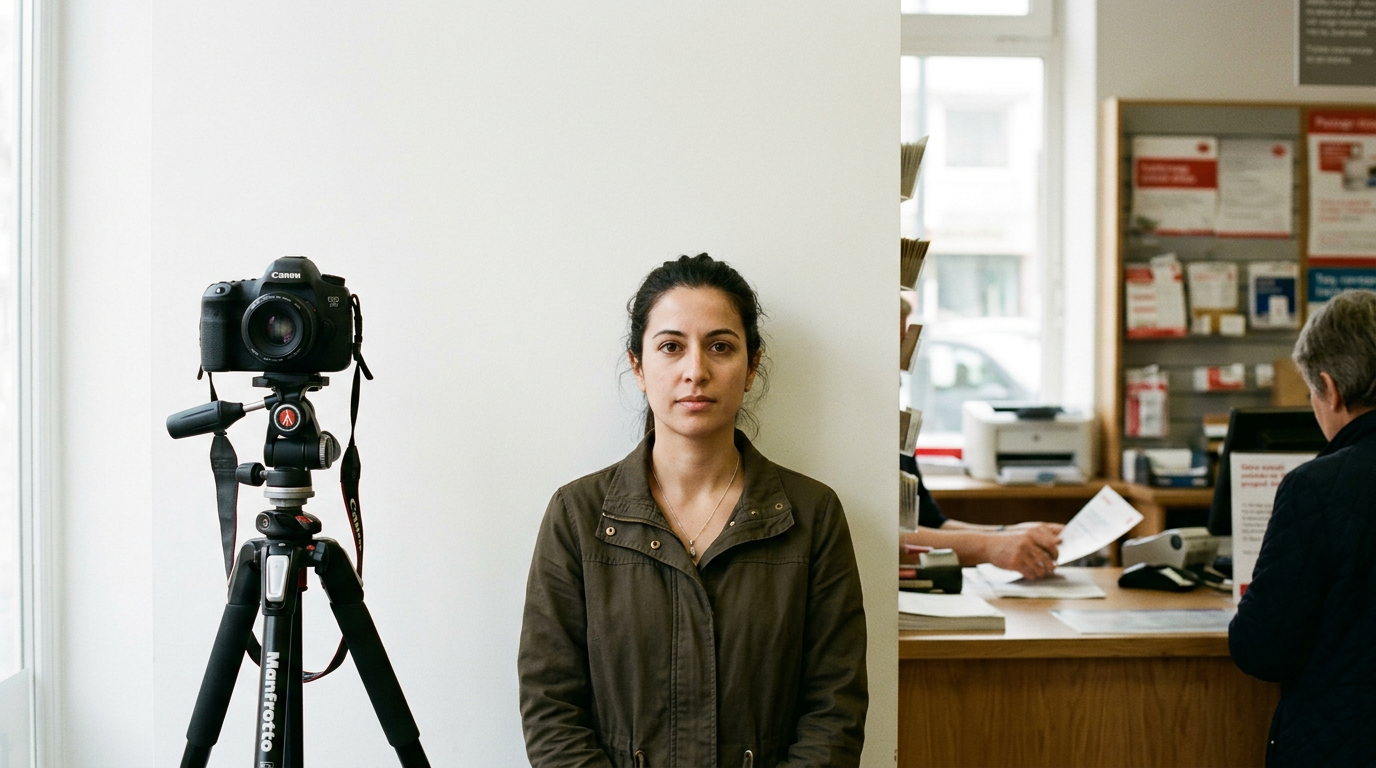
To use the service, customers visit a participating post office during normal operating hours. The staff uses dedicated point-and-shoot camera setups with predefined lighting and backdrops. Once captured, the photo is processed through their system and printed immediately on quality gloss paper. The entire interaction is transactional and finalized at the counter. For a broader look at similar venues, you might explore Where to get passport photos: Comparing 4 Australian service providers.
Ubiquity provides baseline reliability
Because no appointment is necessary, the service leans heavily on walk-in convenience. The passport photo service costs $23.50, establishing a baseline mid-tier price for physical prints. A significant operational safeguard is their replacement policy: if a passport authority rejects the photos within the necessary timeframe, Australia Post will replace them at no cost when returned with a receipt. This ensures the applicant is not paying twice for a compliance failure.
The practical limit of this service is its reliance on standard retail environments. The lighting setups are rigid and designed for adults standing or sitting on a stool, making it highly impractical for infants who cannot support their own heads. Furthermore, applicants are bound by standard postal business hours, which often means navigating long queues during peak times. I would hold off on this option if you are attempting to photograph a newborn, as the physical setup simply does not accommodate them.
Practical rule: Always retain your retail receipt when purchasing physical passport photos; replacement guarantees are void without proof of purchase.
Pros
- Provides immediate, printed color photographs on quality gloss paper.
- Requires no appointment for walk-in service.
- Offers a free replacement if photos are rejected and returned with a receipt.
Cons
- Restricted to standard post office operating hours.
- In-store queues can result in unpredictable wait times.
- Physical setups are poorly adapted for infant photography.
3. Officeworks
Officeworks functions as a major office supplies and photography printing retail chain, offering passport capture as an extension of its print-and-create departments. It caters to budget-conscious adults who are already visiting the store for stationary or printing needs and want to check a bureaucratic task off their list.
The process occurs at the store's designated print counters. Staff capture the image using a standardized digital camera and feed it into a biometric passport photo system. This internal software actively checks the captured image against over 100 specifications outlined by the International Civil Aviation Organisation to ensure baseline compliance before the image is committed to paper.
Algorithmic checks at the retail counter
The service is priced at $20.95 and includes a certificate of compliance, providing a tangible record of the system's checks. The system is flexible enough to handle various foreign destinations, allowing the staff to customize the passport and visa photo printing to suit specific international sizing requirements beyond standard domestic formats.
Operating within a bustling retail store naturally restricts the quality of the photography environment. The sessions occur amid high-foot-traffic areas, characterized by harsh overhead fluorescent lighting and constant background noise. Because the staff are general retail workers rather than specialized portrait photographers, handling difficult subjects is a challenge. Bringing a distracted toddler into this chaotic setting is highly unadvisable, since the absence of a quiet, controlled studio space makes capturing a compliant, neutral expression incredibly difficult. This option works best for adults who need a fast, affordable physical print while running other errands.
Pros
- Checks compliance against over 100 international specifications.
- Priced competitively at $20.95 with a compliance certificate.
- Customizes prints for specific foreign destination requirements.
Cons
- Photography takes place in a distracting, high-traffic retail setting.
- Staff are general retail workers rather than specialized photographers.
- Lacks a controlled, quiet environment necessary for young children.
4. Photoland
While chain stores focus on high-volume printing, specialized boutique outlets focus entirely on high-stakes accuracy. This independent photo printing and custom framing retailer has carved out a niche specializing in international passport and visa photography. It caters directly to premium buyers, expatriates, and professionals who cannot afford a visa rejection and are willing to pay extra for specialized, hands-on expertise.
The mechanism here is a traditional studio session scaled down for document photography. Operating out of Shop 5, 60 Elizabeth Street in Sydney, the staff physically pose the subject, adjust professional strobe lighting to eliminate shadows, and manually format the resulting image files to meet the exact millimeter requirements of the target jurisdiction. They process the files for either digital delivery or physical printing on site.
Premium pricing secures manual precision
The facility offers a 100% acceptance guarantee, promising a free redo or a full refund if the photos are rejected by the authority, effectively mirroring the guarantees of digital platforms but with in-person execution. A digital-only US passport or visa photo is priced at $59.95, while a Digital plus 2 printed photos option costs $69.95, reflecting the manual labor and specialized knowledge applied to each session.
Severe geographic and temporal constraints restrict access to this service. Operating strictly from Monday through Friday between 8:00 AM and 4:30 PM, the shop remains out of reach for weekend applicants and standard office workers. Furthermore, because the company runs out of a single physical location in Sydney, it is completely inaccessible to anyone outside that specific urban radius. I would skip this for a standard domestic renewal and instead reserve it for highly complex, non-standard foreign visa applications where precision is paramount.
Pros
- Offers a 100% acceptance guarantee with a free redo or refund.
- Provides specialized expertise for complex international visa requirements.
- Delivers both digital-only and printed photo packages.
Cons
- Highly premium pricing starting at $59.95 for digital files.
- Limited to a single physical location in Sydney.
- Operating hours strictly exclude weekends and late afternoons.
5. Camera House
Stepping past rows of high-end lenses and professional DSLRs reveals a dedicated printing counter geared toward precise official identification. This retail camera store franchise across Australia leverages its photographic equipment expertise to offer digital printing and custom passport photo services. It serves adult travelers who prefer interacting with dedicated photography enthusiasts rather than general postal or office supply clerks.
Customers walk into a franchise location where retail staff use professional-grade DSLR cameras and dedicated lighting umbrellas. The staff capture the image and manually adjust the cropping and sizing in their backend software. They specifically tailor the photo parameters to match specifications for international destinations including the United States, Europe, and Canada, before printing the final images in-store. If you are comparing professional avenues, 6 Ways to Get a Professional Passport Photo in 2026: Service Comparison breaks down similar studio workflows.
Franchise networks offer localized expertise
The advantage of this model is the equipment and the walk-in accessibility. Most stores accept walk-ins for passport photo services with no appointment needed, removing the scheduling friction typical of dedicated portrait studios. They also provide a passport photo guarantee where they will retake the photo free of charge if it is rejected by authorities, protecting the buyer's initial investment.
The operational constraint of the franchise model is consistency. Because these are individually operated franchise locations, the specific lighting setup, wait times, and staff experience levels can vary wildly from one suburb to the next. What would make me hesitate is the lack of standardized digital delivery; their primary focus remains physical printing, which adds a digitization step if your application portal requires a file upload. This option suits adults who want better lighting than a post office but still require walk-in convenience.
Pros
- Staff manually tailor parameters for US, Europe, and Canada.
- Accepts walk-ins without the need for prior appointments.
- Includes a guarantee to retake rejected photos free of charge.
Cons
- Service consistency varies between individual franchise locations.
- Geared heavily toward physical prints rather than digital files.
- Requires travel to a specific camera retail location.
6. Passport Photo Online
What happens when you need an official document photo but cannot leave your living room? This online DIY portal and app utilizes artificial intelligence to format user-taken photos for official document standards. It is targeted at tech-savvy adults who want the convenience of at-home photography but lack the image editing skills to format the photo themselves.
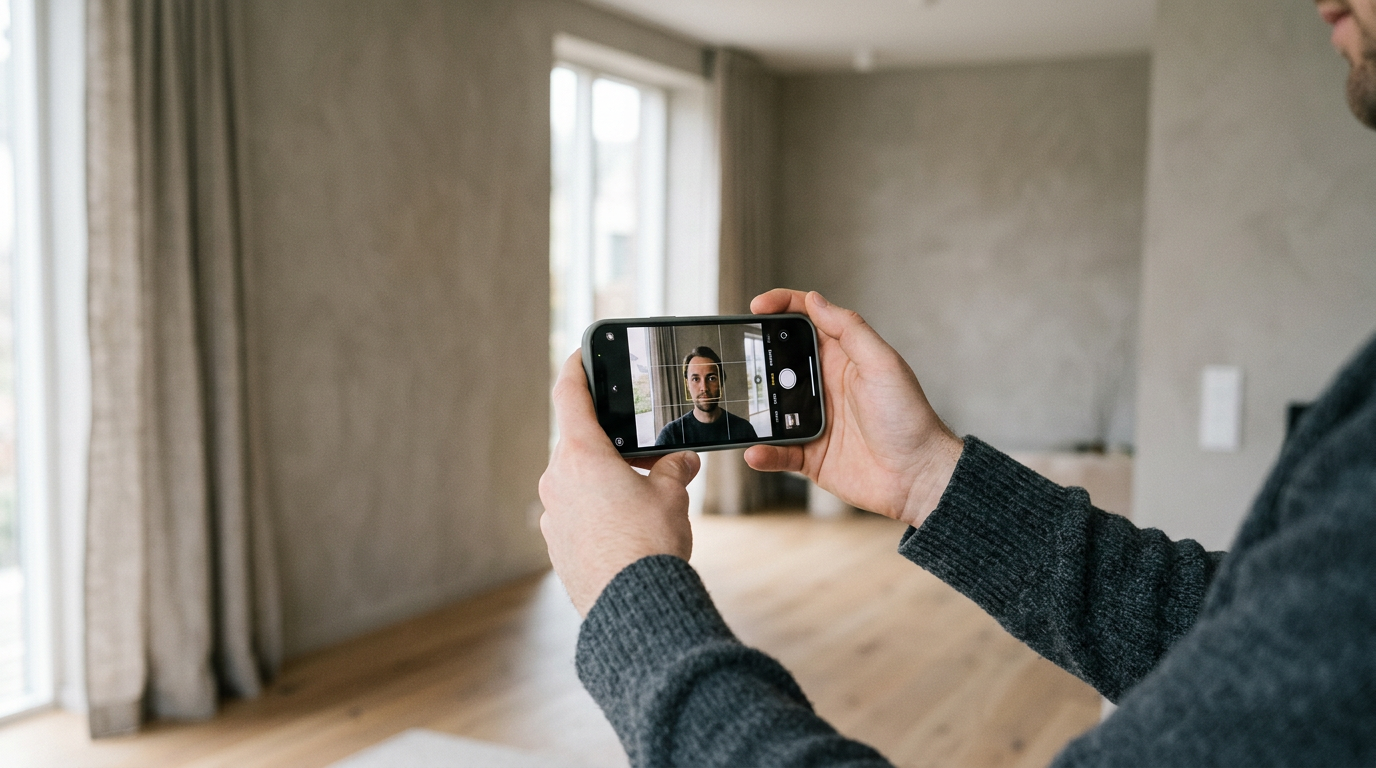
The user takes a photo using their own smartphone camera against any background and uploads it to the portal. The backend artificial intelligence engine scans the image, removes the background, and applies an algorithmic crop. The software evaluates the lighting, head position, and eye visibility against a database of document standards, outputting a digital file formatted for the specific target document.
Algorithmic cropping enables self-service
This platform excels at removing the friction of physical travel. By automating the background removal and formatting, it turns a standard smartphone into a document scanner, allowing users to iterate on their photos until they are satisfied with their expression. The AI handles the complex biometric geometry, ensuring the resulting file meets the dimensional standards of official documents.
Success with this software depends entirely on the user's ability to control their surrounding environment. While the AI can replace a background, it cannot fix harsh directional shadows cast across the face by poor room lighting, nor can it correct a low-resolution capture. The user must follow specific base lighting instructions for the AI to work effectively. I would skip this if you have poor indoor lighting or an older smartphone camera, as the resulting image quality will struggle to meet government clarity standards. This platform is ideal for adults who can follow lighting instructions and need a digital file quickly.
Pros
- Utilizes AI to automatically format user-taken photos.
- Operates entirely online through a DIY portal and app.
- Checks images against official document standards automatically.
Cons
- Requires the user to manage their own facial lighting setup.
- Output quality is strictly limited by the user's smartphone camera.
- Operates as a self-service model without physical staff assistance.
Matching the Service to Your Situation
Choosing the right avenue depends entirely on who is being photographed and what the final application requires.
If your situation involves photographing an infant or a toddler, AI-Powered Home Capture is the only practical route. BabyPassportMaker removes the stress of the retail environment entirely, allowing you to secure a compliant image at home with a 100% refund safety net.
For adults who require an immediate physical print and are running other errands, the General Retail Pharmacy model offers a fast, transactional solution. Officeworks checks the necessary compliance boxes at a competitive price point, provided you can tolerate the busy retail environment.
When standard postal convenience is the priority for an adult applicant, the Government Postal Service model is highly accessible. Australia Post provides widespread walk-in access and reliable physical prints, making it a safe choice for standard domestic renewals.
If you are dealing with a highly complex foreign visa application and cannot risk a rejection under any circumstances, the Specialized Photo Studio model is necessary. Providers like Photoland and Camera House apply professional lighting and manual formatting expertise, ensuring precision at a premium price.