Analyzing Passport Photo Examples: Why Framing, Lighting, and Expression Fail
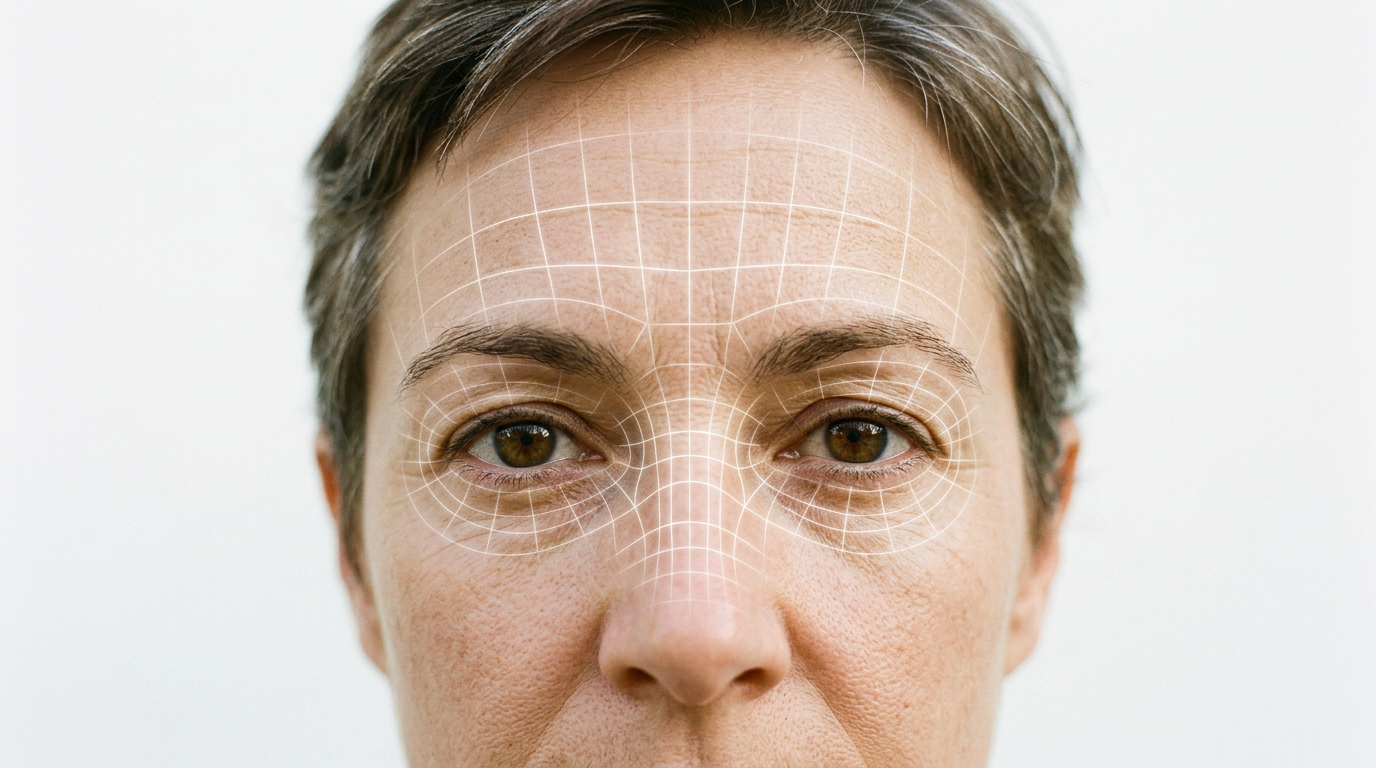
Most passport applications are not delayed by missing documents or incorrect fees, but by photographs that fail initial biometric scanning. Applicants often look at standard passport photo examples and assume the visual rules are merely aesthetic guidelines intended to produce a uniform document. In reality, modern border control relies heavily on automated facial recognition systems that read a photograph as a strict geometric map. A slight shadow under the chin, a tilt of the head, or a background that blends into a subject's clothing does not just make a poor picture - it physically breaks the biometric software's ability to measure the face. Understanding exactly how and why these errors trigger automatic rejections allows applicants to capture compliant images on the first attempt.
Quick Summary
A compliant passport photograph is a strictly formatted biometric data file designed for automated facial recognition systems, requiring even illumination, specific head-to-image proportions, and a neutral resting expression.
- Facial mapping: Automated systems rely on the exact distance between the pupils to scale the rest of the face.
- Shadow rejection: Hard shadows across the face or background are interpreted as physical features, altering your facial geometry.
- Framing thresholds: The head must occupy a specific percentage of the vertical space to allow for digital cropping.
- Expression limits: Smiling raises the cheeks and narrows the eyes, breaking the required structural baseline.
Table of Contents
- How automated biometric systems read a face
- Where ambient lighting causes immediate rejection
- Why framing rules matter more than resolution
- What a neutral expression actually requires
- How background texture breaks digital extraction
- FAQ
- Recommended Reads
How automated biometric systems read a face
The criteria for official identity documents are not determined by human border agents, but by the biometric algorithms used at automated passport control gates. When a digital or scanned photograph enters the system, the software does not see a portrait. It searches for a highly specific structural baseline. The process always begins by locating the eyes. The exact interpupillary distance - the measurement in millimeters between the center of the left pupil and the center of the right pupil - acts as the foundational scale for the entire image.
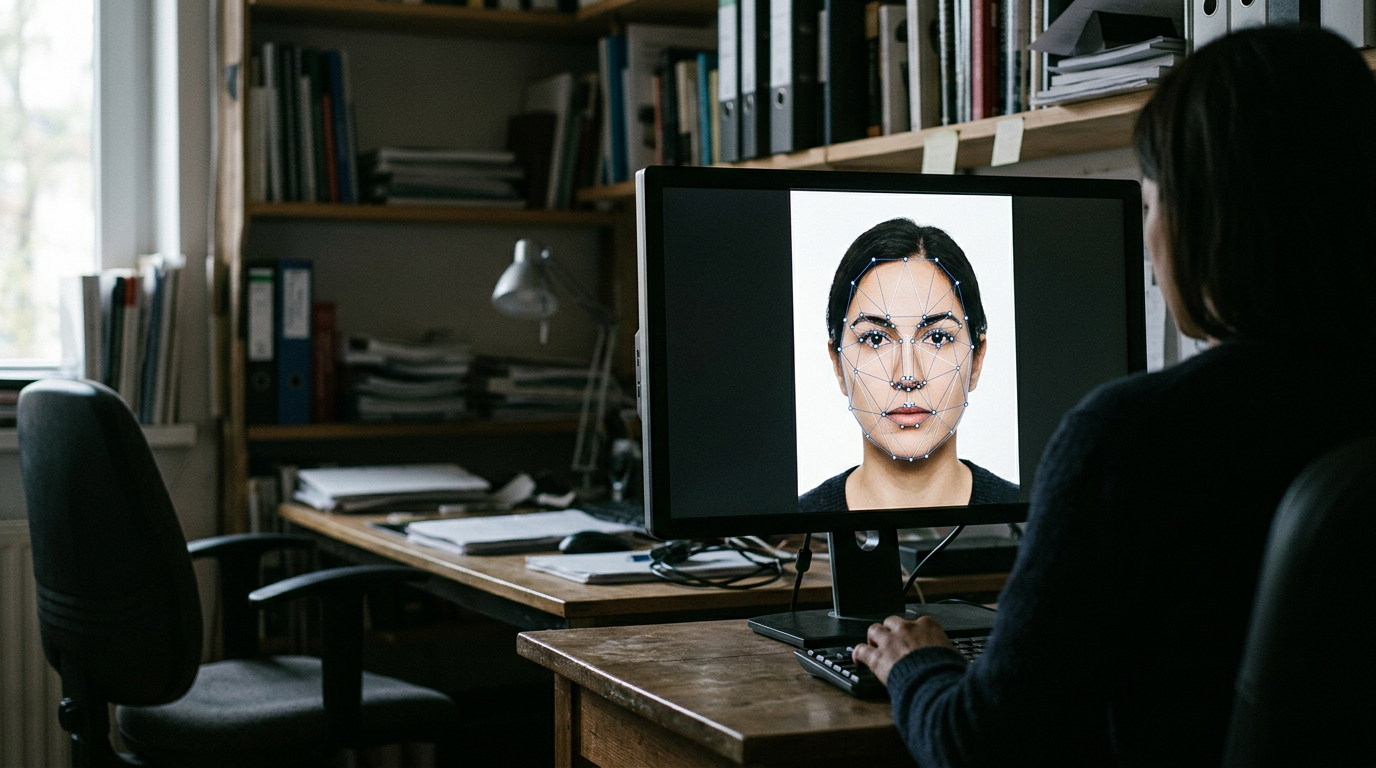
Once the software locks onto the eyes, it draws a structural grid down the face. It measures the distance from the bridge of the nose to the upper lip, the width of the mouth, and the curve of the jawline. If the subject's head is tilted forward or backward, the software cannot calculate these distances accurately because perspective distortion shortens the vertical measurements. Reviewing exactly how to get the perfect passport photo example reveals that automated systems prioritize this structural geometry over aesthetic quality.
This rigid mapping explains why glasses are now universally banned in identity photographs for major jurisdictions like the US and Australia. Even if the frames are thin and the lenses are clear, the curvature of the glass catches microscopic reflections from the camera flash or room lighting. These micro-glints obscure the exact edge of the pupil, preventing the software from establishing its primary anchor point. For infants and toddlers, this biometric anchoring is particularly difficult to secure, as they struggle to hold their heads perfectly level. If an infant looks slightly downward, the camera records a foreshortened nose and an enlarged forehead, resulting in a biometric map that will not match their face in person.
Where ambient lighting causes immediate rejection
Lighting failures are the most common reason a photograph is rejected by government processing centers. Human eyes easily adjust to uneven room lighting, but digital image sensors record exact values of light and dark. When you stand under a standard ceiling fixture, the downward angle of the light creates distinct drop shadows beneath your eyebrows, nose, and chin.
To a biometric algorithm, a shadow is not a lighting effect - it is a physical boundary. A heavy shadow under the chin effectively erases the jawline, causing the software to miscalculate the total length of the face. Unilateral lighting - light coming heavily from one side, such as standing sideways next to a window - creates a gradient where one side of the face is bright and the other falls into shadow. For instance, strict guidelines like the Ireland passport photo requirements mandate uniform illumination because a shadow across one cheek alters the perceived symmetry of the face.
Practical rule: Position the subject directly facing a natural light source, such as a large window during daylight hours, ensuring the light hits both sides of the face equally to eliminate structural shadows.
When photographing infants, lighting becomes substantially more challenging because they are often photographed lying down on their backs. If the room is lit by overhead bulbs, the light hits the baby's face from the forehead down toward the chin, casting deep shadows inside the eye sockets and under the nose. Using an on-camera flash to counter this often creates a harsh specular highlight - a bright white reflection of the flash - on the forehead or cheeks, blowing out the skin texture and causing another form of software rejection.
Why framing rules matter more than resolution
Applicants often focus heavily on capturing a high-resolution image, assuming clarity is the most critical factor. However, identity document processors care much less about megapixel counts than they do about exact dimensional framing. The entire system is built around physical cropping templates. If a subject's face is too close to the camera, the head occupies too much of the vertical space, leaving insufficient room for the passport printer's mechanical crop margins.
When understanding the 2026 UK passport photo requirements, the defining metric is not the file size but the exact millimeter distance from the crown of the head to the chin. Every major issuing authority dictates a strict