Mastering the Chinese Passport Photo Size and 2026 Technical Standards
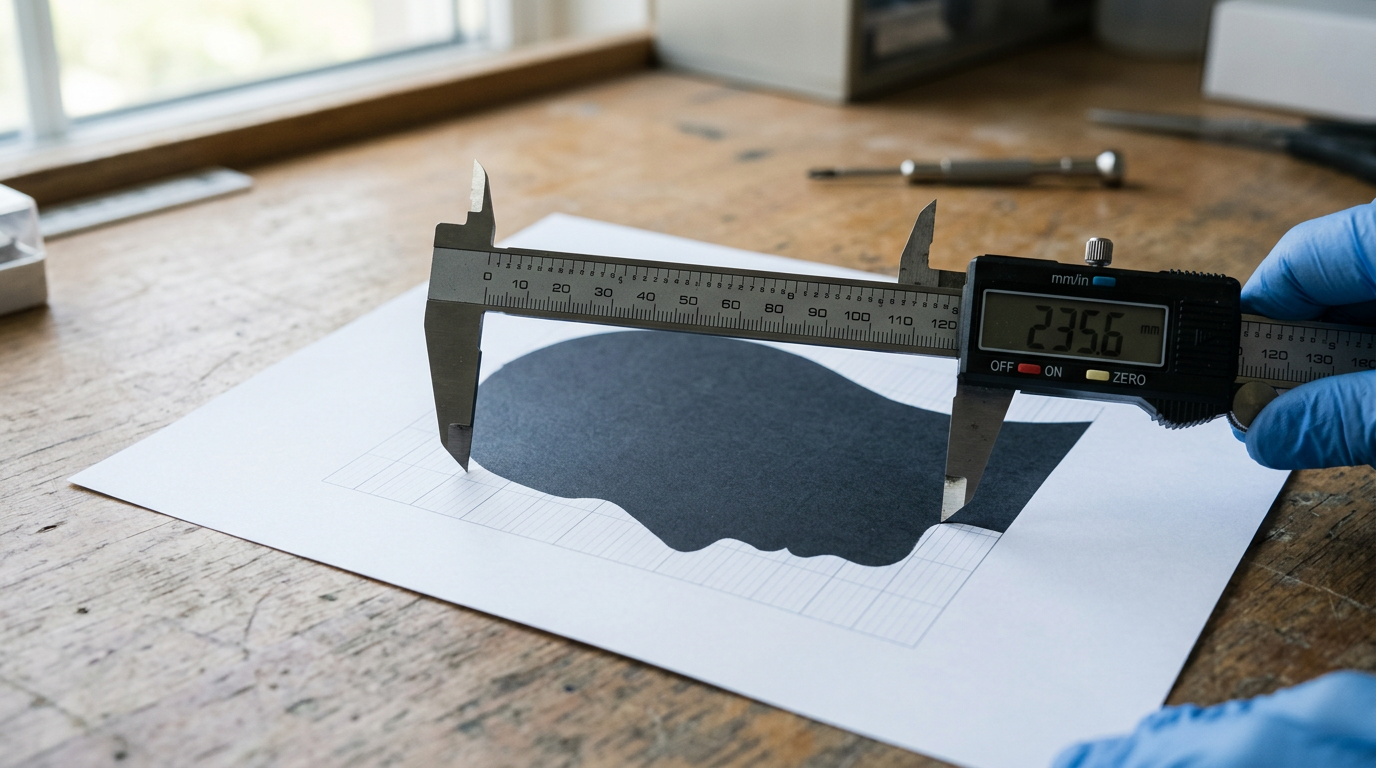
The most common mistake applicants make when submitting documentation for travel to China is assuming they can print a standard portrait, trim the edges with scissors, and tape it to the form. By the time you start cutting, the application has already failed. The exact Chinese passport photo size is not just a physical bounding box; it is a rigid geometric grid where the distance from the chin to the crown of the head, the space above the hair, and the horizontal placement of the pupils must pass an automated biometric scan before a human consular officer ever reviews the file. A millimeter of deviation in the physical print, or a single compression artifact in the digital upload, triggers an immediate rejection code that stalls the entire visa or passport process.
Quick Summary
The Chinese passport and visa photo standard demands strict physical dimensions of 33mm wide by 48mm high, paired with highly specific facial scaling metrics.
- Physical prints must measure precisely 33x48mm with no white borders.
- The head height must occupy between 28mm and 33mm of the total vertical space.
- Digital submissions require a 24-bit RGB file sized between 40KB and 120KB.
- Backgrounds must be pure white (RGB 255, 255, 255) without any shadows or texture.
- All facial features, including the edges of both ears and eyebrows, must be completely visible.
Table of Contents
- Why the Chinese passport photo size breaks standard crop tools
- Where biometric validation fails before printing
- What happens when you use European dimensions instead
- How peripheral regions measure their specifications
- Why infants fail the strict framing requirements
- What lighting defects trigger digital rejection
- FAQ
- Recommended Reads
Why the Chinese passport photo size breaks standard crop tools
The core difficulty with the Chinese specification lies in its unusual aspect ratio and internal scaling rules. The required dimensions are 33mm in width and 48mm in height. Standard commercial printing kiosks and default smartphone cropping tools are built around 4:5 or 1:1 aspect ratios, typically outputting a 2x2 inch (51x51mm) square. When you attempt to force a 33x48mm rectangle out of a standard square portrait, the internal geometry of the face rarely survives the transition.
China requires the head width to sit tightly between 15mm and 22mm. Concurrently, the head height from the bottom of the chin to the top of the head (excluding hair volume) must measure between 28mm and 33mm. If you take a standard 2x2 inch photo where the face is properly sized for that larger canvas, cropping the sides down to 33mm will often slice off the applicant's ears. If you scale the entire image down so the ears fit inside the 33mm width, the head height frequently drops below the 28mm minimum, resulting in a "head too small" error. To get this right, the camera must capture the subject from slightly further back than usual, allowing ample negative space to frame the exact dimensions. For comprehensive guidance on this specific framing, refer to Understanding Chinese Passport Photo Size and Compliance Requirements for 2026.
The digital equivalent of this physical constraint is just as rigid. The baseline digital resolution must be exactly 354 pixels wide by 472 pixels high at a resolution of 300 DPI. For higher resolution uploads, the system accepts 420x560 pixels. Any deviation in these exact pixel counts will prevent the file from uploading to the Chinese Visa Application Service Center (CVASC) portal.
Where biometric validation fails before printing
Before a physical photograph is ever printed or attached to a form, the digital file must clear the Chinese consular system's AI pre-screening tool. This portal is notoriously unforgiving, and the most frequent failure mode involves digital file compression rather than the subject's appearance.
The system enforces a narrow file size window: the image must be larger than 40KB but smaller than 120KB. This creates a technical trap. High-resolution modern smartphone cameras output files in the multi-megabyte range. When applicants compress these large files to get under the 120KB ceiling, standard web compressors use aggressive JPEG algorithms. These algorithms save space by discarding color data along high-contrast edges, creating visible pixelation - known as compression artifacts - around the silhouette of the hair and shoulders.
When the Chinese automated system scans the uploaded file, its edge-detection software reads these compression artifacts as a dirty or textured background. The system will immediately issue an "unclean background" or "background not pure white" rejection, even if the original physical backdrop was flawless. A Complete Setup Guide to the Exact Chinese Passport Photo Size in 2026 outlines how to compress the file by adjusting the image dimensions and DPI output directly, rather than relying on lossy slider tools that destroy edge fidelity.
Practical rule: Never use a generic "reduce file size" web tool for a biometric photo. Instead, crop the image to exactly 354x472 pixels first, then save it as a high-quality JPEG. Reducing the pixel dimensions to the exact requirement will naturally bring the file size under 120KB without generating background artifacts.
What happens when you use European dimensions instead
Applicants holding multiple passports or applying for consecutive visas often attempt to reuse biometric photos across different embassies. This fails predictably when crossing between Schengen standards and Chinese requirements due to fundamental differences in framing and background rules.
The standard Schengen template measures 35x45mm. The Dutch passport photo requirements, for instance, demand this exact 35x45mm size but permit a light gray, pale blue, or white background, provided the contrast between the subject and the backdrop is distinct. China strictly prohibits any background color other than pure white (RGB 255, 255, 255) with zero gradient. Submitting a gray-backed photo will trigger an instant refusal.
Similarly, the Italian passport photo size adheres to the 35x45mm European norm, requiring the head to measure between 32mm and 36mm from chin to crown. If you attempt to submit an Italian-formatted photo to a Chinese consulate, the geometry clashes fatally. The Italian photo is 2mm too wide (35mm vs 33mm) and 3mm too short (45mm vs 48mm). If you physically trim the 35mm width down to 33mm, the image might fit the physical box on the Chinese form. However, because the Italian standard scales the face up to 36mm high, the subject's head will breach the Chinese maximum head height limit of 33mm. The automated scanner will flag the submission for improper facial scaling. You can review the exact measurements across borders in the International Passport Photo Size Guide: Chinese, Malaysian, and More.
How peripheral regions measure their specifications
Understanding how neighboring or frequently traveled regions define their biometric standards helps isolate exactly why the Chinese requirements are uniquely difficult to satisfy. The dimensions often sound similar but harbor internal structural differences that ruin cross-compatibility.
The Malaysia passport photo size measures 35mm wide by 50mm high. While the 50mm height is very close to China's 48mm, the 35mm width makes the frame significantly wider. More importantly, Malaysia requires the subject to wear dark clothing that covers the shoulders to contrast heavily against the white background. China merely suggests avoiding white clothing to prevent floating-head syndrome, but does not strictly mandate dark attire.
The South Africa passport photo size matches the European 35x45mm standard but has slightly looser internal framing rules, allowing a head height between 25mm and 35mm. Because this range encompasses the Chinese 28-33mm rule, an applicant might mistakenly believe a South African photo will pass in China. It will not, purely due to the external 35x45mm cut. You cannot stretch a 45mm tall photo to fit a 48mm tall box without digitally distorting the subject's facial proportions, which immediately fails biometric ratio checks. Those managing applications for these specific regions should consult A 2026 Setup Guide for the nepali passport photo size and South African Specs to keep the dimensions distinct.
Dimensional Comparison Table
| Country Standard | External Dimensions (W x H) | Required Head Height | Required Background Color |
|---|---|---|---|
| China | 33mm x 48mm | 28mm - 33mm | Pure White (No shadows) |
| Schengen (Italy/Netherlands) | 35mm x 45mm | 32mm - 36mm | White, Light Gray, or Pale Blue |
| Malaysia | 35mm x 50mm | 25mm - 30mm | Pure White (Dark clothing required) |
| South Africa | 35mm x 45mm | 25mm - 35mm | White or Light Gray |
| United States | 51mm x 51mm (2x2") | 25mm - 35mm | Plain White or Off-White |
Why infants fail the strict framing requirements
Photographing adults for biometric documents is an exercise in following instructions; photographing infants for the Chinese standard is a technical fight against physics. Unlike some Western nations that relax the rules for children under one year old, the Chinese consular system demands strict adherence to the exact same biometric markers for a three-week-old newborn as it does for a thirty-year-old applicant.
The most frequent failure point for infant applications is the "visible ears" and "open eyes" mandate. Newborns lack cervical spine control and naturally rest their chins against their chests, which obscures the neck and folds the ears against the backdrop. When parents attempt to support the baby's head, the Chinese system routinely rejects the photo because a parent's finger, hand, or supporting object is visible in the frame. Even placing a white towel under the baby's neck to prop up the chin will fail if the towel casts a visible shadow or introduces a textured cloth pattern into the background.
Furthermore, the baby must be looking directly at the camera lens with both eyes fully open and the mouth closed. A pacifier, an open mouth crying, or eyes looking slightly off-axis will trigger a biometric rejection. To see how these official guidelines impact setup times for families, review How to Get the Correct Passport Size Photo in 2026: Official Guidelines and Standards.
Practical rule: To photograph an infant for a Chinese application without hands showing, lay the baby flat on a rigid board covered tightly by a pure white, untextured muslin cloth. Roll two small white socks and place them under the cloth on either side of the baby's neck to keep the head facing forward and the ears visible without introducing external objects into the frame.
What lighting defects trigger digital rejection
The Chinese biometric scanner evaluates lighting through pixel luminosity variance. It measures the exact brightness of the pixels on the left cheek against the right cheek. If the variance exceeds a specific threshold, the image is rejected for "uneven illumination."
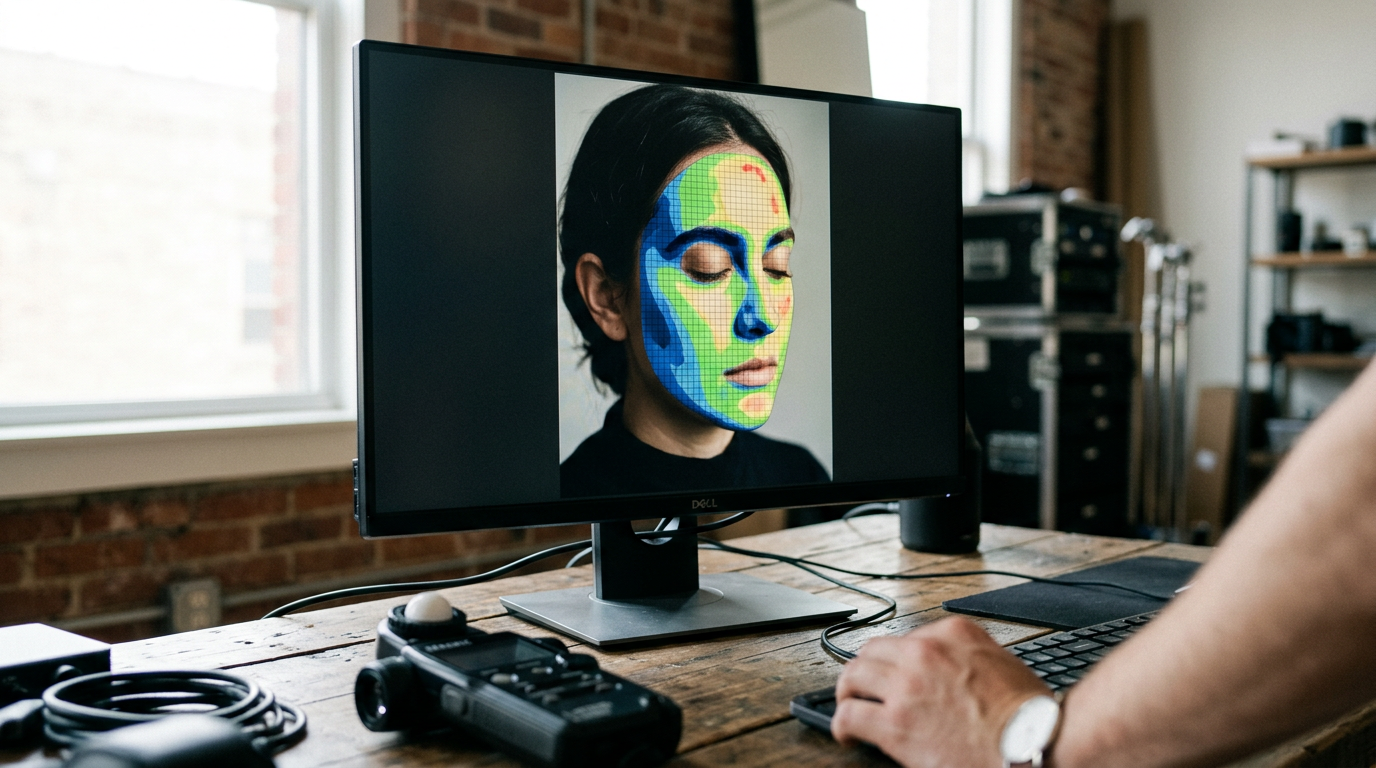
This makes standard home setups highly prone to failure. If you stand near a window to use natural light, one side of your face will inevitably be brighter than the other. If you use a direct camera flash to compensate, the flash creates two distinct failure modes. First, it causes specular highlights - harsh white reflections on the forehead, nose, and cheeks - which the scanner reads as obscured facial features. Second, according to the inverse square law of light, a direct flash illuminates the subject brightly but fails to reach the wall behind them with the same intensity. This turns a pure white wall into a muddy gray background in the final image, failing the RGB 255 purity check.
The requirement for zero shadows extends beneath the chin and behind the ears. A single overhead light will cast a dark shadow onto the neck, which the edge-detection algorithm sometimes misinterprets as part of the clothing, ruining the chin-to-crown measurement. Proper illumination requires diffuse, symmetrical lighting from both sides of the camera, aimed both at the subject and independently at the background to wash out any cast shadows. While American Passport Photo Requirements and Size Specs permit off-white backgrounds with soft natural shadows, the Chinese standard treats any shadow as an obstruction of the biometric data.
FAQ
Can I wear glasses in a Chinese passport photo?
No. Recent updates to the Chinese biometric standard strictly prohibit the wearing of glasses of any kind. Even clear prescription lenses with non-reflective coatings are banned, as the frames can obscure the edges of the eyes or cast micro-shadows on the cheekbones.
What is the exact digital resolution required for a Chinese visa upload?
The base digital resolution must be exactly 354 pixels wide by 472 pixels high. The system also accepts a higher resolution of 420 pixels wide by 560 pixels high. The file must be a 24-bit true color JPEG.
Will a US 2x2 inch photo work if I just cut the sides off?
No. A standard US 2x2 inch photo scales the face to occupy between 25mm and 35mm. If you trim the 51mm width down to 33mm, you will likely cut off the ears or the sides of the hair, which triggers an immediate "features obscured" rejection.
What jewelry is allowed in the photograph?
All jewelry must be removed. Necklaces, earrings, facial piercings, and hair accessories alter the geometric silhouette of the face and neck, causing the automated scanning software to misidentify the edge of the subject.