Comparing 3 Photo Passport Locations for Australian Travelers in 2026
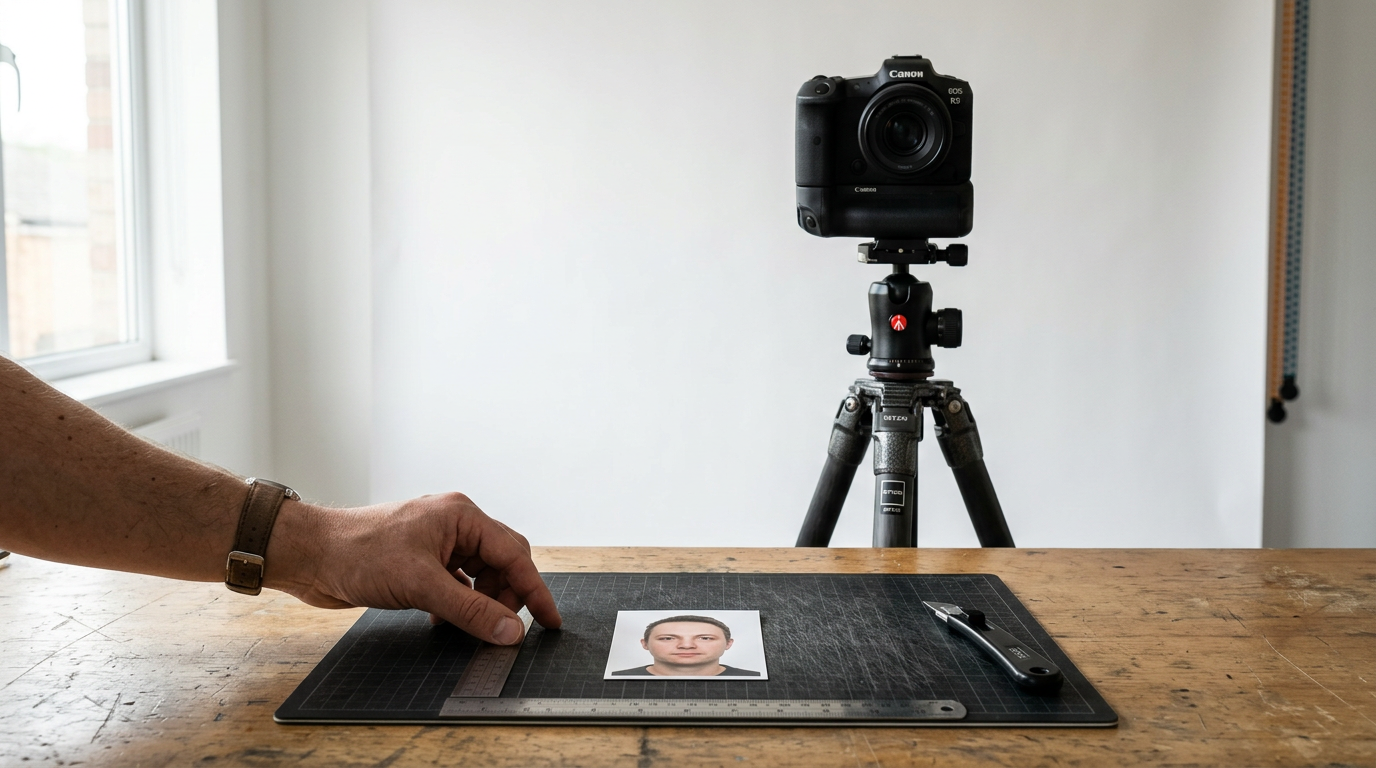
A rejected passport image extends processing times by up to three weeks, turning a simple administrative task into a missed flight. Finding reliable photo passport locations requires knowing which venues prioritize international compliance over standard printing. Many applicants assume any camera will do, only to discover that shadows behind the ears or a chin-to-crown measurement off by two millimeters will trigger an automatic failure at the passport office. The difference between a smooth application and a costly delay usually comes down to the biometric verification tools used at the point of capture.
Quick Summary
When evaluating physical providers for document images, the primary differentiator is the level of biometric verification applied before printing. Choosing the right venue dictates whether you walk away with a guaranteed compliant image or risk a rejection from the government authority.
- Government Postal Services provide reliable fallback options with free retakes upon rejection.
- Big-Box Retail Outlets scan images against strict International Civil Aviation Organisation (ICAO) standards.
- Dedicated Photography Retailers offer expert-led capturing, making them ideal for complex subjects.
- Venue lighting and background setups determine how well an image exposes different skin tones.
Table of Contents
- Quick Summary
- Choosing Your Service Environment
- The Mechanics of Biometric Failure
- 1. Australia Post
- The fallback option comes with waiting times
- 2. Officeworks
- Automated compliance replaces human expertise
- 3. Ted's Cameras
- Dedicated photography demands a premium
- Matching Venues to Applicant Needs
- Recommended Reads
Comparison Table
| Provider | Service Environment | Features | Pros | Cons | Target Audience |
|---|---|---|---|---|---|
| Australia Post | Government Postal Services | Walk-in service, captures international formats, integrated with application lodgment. | - Free retakes if rejected - Convenient locations - Integrated lodgment |
- Mixed retail lighting - Waiting in postal queues - Basic camera equipment |
Standard adult applicants renewing locally. |
| Officeworks | Big-Box Retail Outlets | Biometric checking against 100+ ICAO specs, supports 165 countries, certificate provided. | - Software verification - Broad country support - Certificate of compliance |
- Chaotic retail environment - Overhead fluorescent glare - Difficult for infants |
Applicants needing obscure international visa formats. |
| Ted's Cameras | Dedicated Photography Retailers | Expert-led capture, 10-15 minute turnaround, studio lighting, minimum 4 prints. | - Professional lighting - Fast processing - Patient staff |
- Higher baseline cost - Fewer physical locations - Requires travel |
Parents needing compliant images of young children. |
Choosing Your Service Environment
Before analyzing specific providers, it is critical to understand the criteria that separate them. The physical location where your image is captured dictates the equipment used, the lighting available, and the expertise of the operator. We classify these venues into three distinct Service Environment categories, each offering a different trade-off between convenience, cost, and technical precision. Understanding these environments helps narrow down the vast list of passport photo places available in most cities.
The first category is Government Postal Services. These venues prioritize administrative integration. The primary advantage is that the capture happens in the same building where physical applications are lodged. However, the environmental controls are poor. Staff operate in open retail spaces using standard overhead lighting, which introduces risks of shadowing. You are paying for the convenience of a single trip, not for photographic excellence. If you are comparing where to get passport photos: Comparing 4 Australian service providers, this category usually serves as the baseline.
The second category comprises Big-Box Retail Outlets. These locations substitute human photographic expertise with automated software verification. They operate in large warehouse-style environments, which are inherently loud and distracting. To compensate for the poor ambient lighting and untrained staff, these venues route the captured image through proprietary compliance software that checks facial geometry against global databases. This category suits buyers who trust algorithms over human eyes to ensure their documentation meets stringent international standards.
The final category is Dedicated Photography Retailers. These are specialized retail environments where the primary focus is image capture and processing. Operators here understand focal lengths, exposure triangles, and how to manipulate light to eliminate background shadows. They use professional camera bodies and dedicated strobe lighting. This environment eliminates the technical risks associated with poor lighting, but it requires the applicant to make a dedicated trip purely for the photograph.
Practical rule: Never select a venue based solely on operating hours; prioritize locations that offer a written compliance guarantee or free retakes upon official rejection, as the hidden cost of a denied application always exceeds the initial printing fee.
The Mechanics of Biometric Failure
Understanding where passport photos go wrong makes it easier to evaluate the providers below. Modern border control relies on facial recognition software, which maps the geometry of the face. If a physical venue fails to light the subject correctly, shadows falling across the jawline or behind the ears can confuse these algorithms, leading to an immediate manual rejection by the issuing authority.
Similarly, standardizing the distance from the chin to the crown of the head is non-negotiable. Australian standards demand this measurement sit between 32mm and 36mm on a 35x45mm print. Venues must either have physical overlay guides on their camera viewfinders or use post-processing software to crop the image perfectly before it hits the printer. Providers that lack these tools force applicants to rely on the manual estimation of a retail clerk, significantly increasing the likelihood of rejection. When researching a guide to passport photos cost and professional service fees in 2026, the fees charged reflect the venue's investment in these specific compliance mechanisms.
1. Australia Post
You wait in a mixed queue of parcel senders and bill payers. Australia Post operates as a government-owned postal service. It offers walk-in passport and identity photo services across Australia. It remains the most widely recognized physical network for document preparation. Applicants utilize it heavily. The service naturally integrates with the physical lodgment of the application itself.
The mechanism here is entirely manual. It relies on a standardized physical setup rather than advanced software. Staff pull down a dedicated white or light grey physical screen. This usually sits just beside the main retail counter. They use a standard point-and-shoot digital camera. A viewfinder overlay helps frame the applicant's head. Once captured, the image loads into a basic terminal. The system applies a fixed crop before routing it to a dye-sublimation printer behind the counter. According to its published pricing, a set of printed color photos costs $23.50. You receive either six photos sized at 35mm x 45mm or three larger dimension photos. The service operates on a walk-in basis with no booking or appointment required. They capture images for both Australian passports and a wide list of international countries. Crucially, if your passport photos are rejected, Australia Post takes another set free of charge.
The fallback option comes with waiting times
The structural constraint of this environment is the lack of dedicated environmental control. Because the capture zone is situated on an active retail floor, the ambient lighting is a mix of natural light from storefront windows and harsh overhead fluorescent tubes. This combination frequently casts uneven shadows under the applicant's chin or across the background screen. Furthermore, the clerks are administrative professionals handling diverse postal tasks, not trained photographers who know how to adjust exposure settings to compensate for poor lighting.
We would suggest this route for adult applicants renewing standard Australian documentation who already need to hand over physical paperwork at the counter, as the convenience of a single venue outweighs the rudimentary photographic setup.
Pros - No appointments required for walk-in service - Direct integration with physical application lodgment - Guaranteed free retakes if the image is rejected
Cons - Unpredictable queue lengths during peak postal hours - Mixed ambient lighting causes shadowing risks - Staff lack specialized photographic training
2. Officeworks
Processing images through an automated biometric system that checks against over 100 ICAO specifications removes the human guesswork from compliance. Officeworks operates as an Australian retail chain offering in-store passport and ID photo services with integrated biometric checking. It bridges the gap between basic retail capture and highly technical algorithmic verification, turning a standard store visit into a technically robust document check.
Instead of relying on the operator to verify dimensions, the mechanism relies heavily on proprietary software. The staff member captures the image against a standardized background in the store and immediately uploads it to a central terminal. This software runs the image through a strict compliance algorithm that measures facial geometry, checks for red-eye, evaluates background contrast, and verifies head tilt against global standards. The standard in-store passport and ID photo service with a certificate of compliance costs $20.95. Officeworks can print passport and visa photos tailored to meet the standards of up to 165 countries. They also offer capture for children and infants, explicitly recommending extra time for the process to ensure the subject is framed correctly.
Automated compliance replaces human expertise
The honest limit of this solution is the physical environment in which the capture takes place. Big-Box Retail Outlets are loud, chaotic, and heavily trafficked. While the software is exceptional at catching errors, the physical act of getting a calm, neutral expression from a subject in a warehouse aisle is difficult. The recommendation to allocate extra time for children is a direct reflection of this environmental friction; parents must keep infants completely still and looking directly at the lens while surrounded by retail noise.
We would choose this path when requiring documentation for obscure foreign visas or diverse international applications, as the software natively formats for 165 different national standards without requiring the applicant to memorize the specific dimensions.
Pros - Software checks against over 100 ICAO specifications - Supports formatting for up to 165 different countries - Provides a physical certificate of compliance
Cons - Warehouse environment is highly distracting for subjects - Requires subjects to maintain composure in a busy retail aisle - Infant capture requires significant patience and extra time
3. Ted's Cameras
When an automated booth repeatedly rejects an applicant due to specific lighting needs or physical mobility constraints, specialized equipment becomes necessary. Ted's Cameras is an Australian photography retailer providing expert-led, in-store passport and ID photo services. This venue abandons the automated, clerk-driven models in favor of dedicated photographic hardware operated by staff who understand light and exposure.
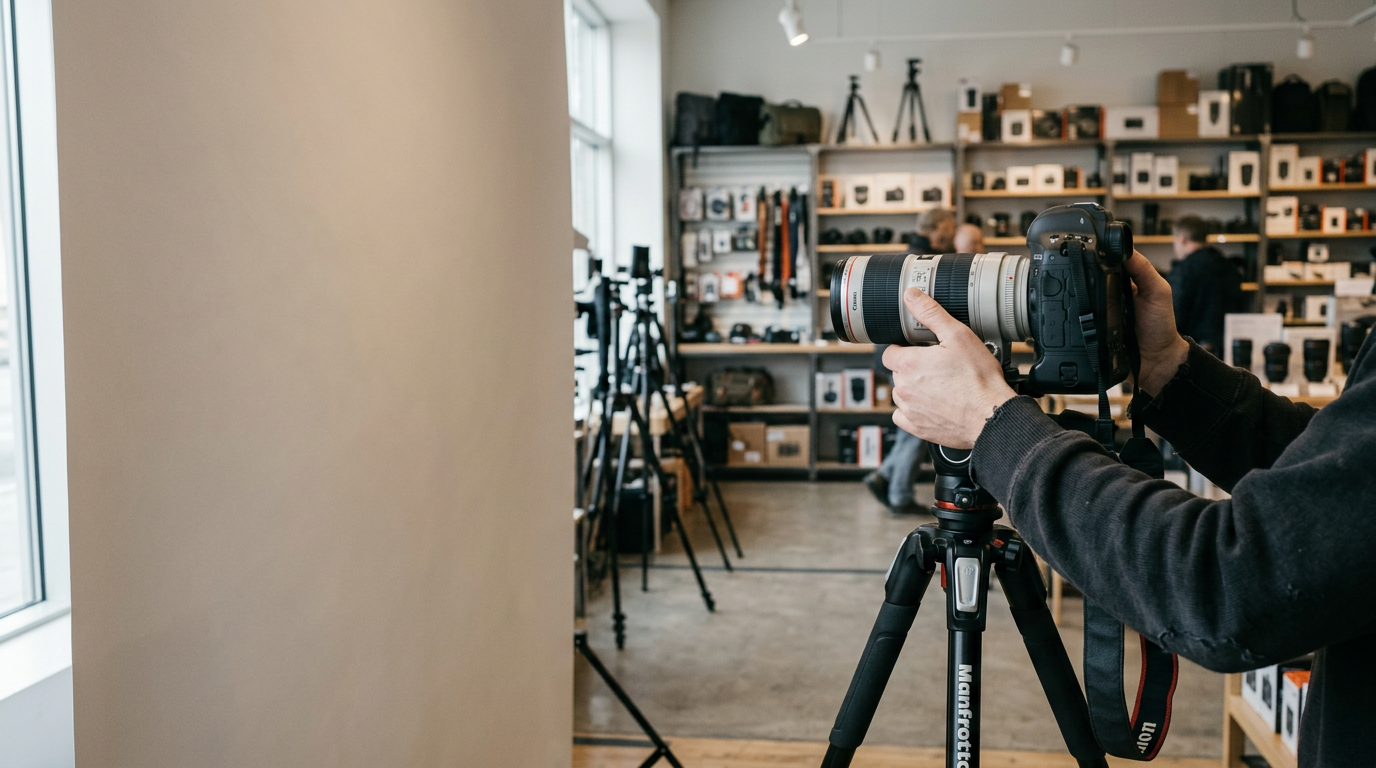
The mechanism here is fundamentally different from postal or big-box stores. Staff utilize professional DSLR camera bodies with specialized portrait lenses, paired with dedicated studio lighting setups - often including bounce flashes or softboxes to eliminate harsh shadows behind the ears and under the chin. The photographer actively manages the exposure triangle to ensure the background remains perfectly white or grey without blowing out the applicant's skin tones. According to its published pricing, standard Australian passport, baby and toddler passport, and international visa photo services cost $24.95. Every photo service provides a minimum of 4 printed photos, and the entire process is ready in-store within 10 to 15 minutes, with no appointment needed. Like the postal option, if a government authority does not approve the image, they will reshoot it for free.
Dedicated photography demands a premium
The limitation of this approach is geographic accessibility and a higher baseline cost. Dedicated Photography Retailers have a much smaller physical store footprint than national postal networks or office supply chains. Applicants must actively seek out these locations, which often means traveling further into commercial centers or shopping malls. You are paying a premium for the hardware and the expertise, which is unnecessary for a straightforward adult renewal but critical when the standard automated methods fail.
We would bypass other options and head straight here when securing a passport photo for infant near me, as the professional lighting setup and patient, knowledgeable staff drastically reduce the risk of a newborn's image being rejected for lighting or postural errors. For parents dealing with this specific challenge, understanding the rules outlined in mastering the NZ passport photo requirements for infants in 2026 makes the value of this expert-led capture immediately clear.
Pros - Professional studio lighting eliminates background shadows - Expert staff actively manage camera exposure settings - Fast 10 to 15-minute turnaround time without appointments
Cons - Highest baseline cost of the verified physical options - Fewer store locations requires longer travel times - Overkill for straightforward adult document renewals
Matching Venues to Applicant Needs
Selecting the right provider requires mapping your specific application constraints to the appropriate Service Environment category. Different administrative burdens demand different technical approaches, and understanding these boundaries ensures you do not overpay for unnecessary expertise or underinvest in required compliance checks.
For applicants renewing standard Australian documents who prefer to handle the entire process in one trip, Government Postal Services remain the most logical choice. The integration of image capture and document lodgment saves time, even if the photographic environment is basic. The included free retake policy acts as a safety net against the inherent risks of poor retail lighting. This category is best for adults with standard features who simply need to get the paperwork moving.
When applying for international visas or foreign passports, Big-Box Retail Outlets offer the safest technical route. The sheer volume of international specifications makes manual cropping dangerous. By relying on biometric software that checks against 100+ ICAO specifications and formats for 165 countries, applicants remove human error from the equation. If you need a 51x51mm print for one country and a 35x45mm print for another, this software-driven environment guarantees the crop will be exact.
Finally, Dedicated Photography Retailers are strictly necessary when the subject cannot conform to automated environments. Infants, toddlers, and individuals with physical mobility constraints often trigger biometric failures in automated booths because they cannot hold a neutral, upright pose. Professional photographers using dedicated DSLR equipment and strobe lighting can capture a compliant image in fractions of a second, overcoming the environmental hurdles that cause rejections elsewhere. For modern alternatives allowing you to bypass physical venues entirely, reviewing where to get digital passport photos: A complete guide to Australian submission methods offers insight into at-home digital workflows.