Navigating Irish Passport Photo Requirements for Fast Approval in 2026
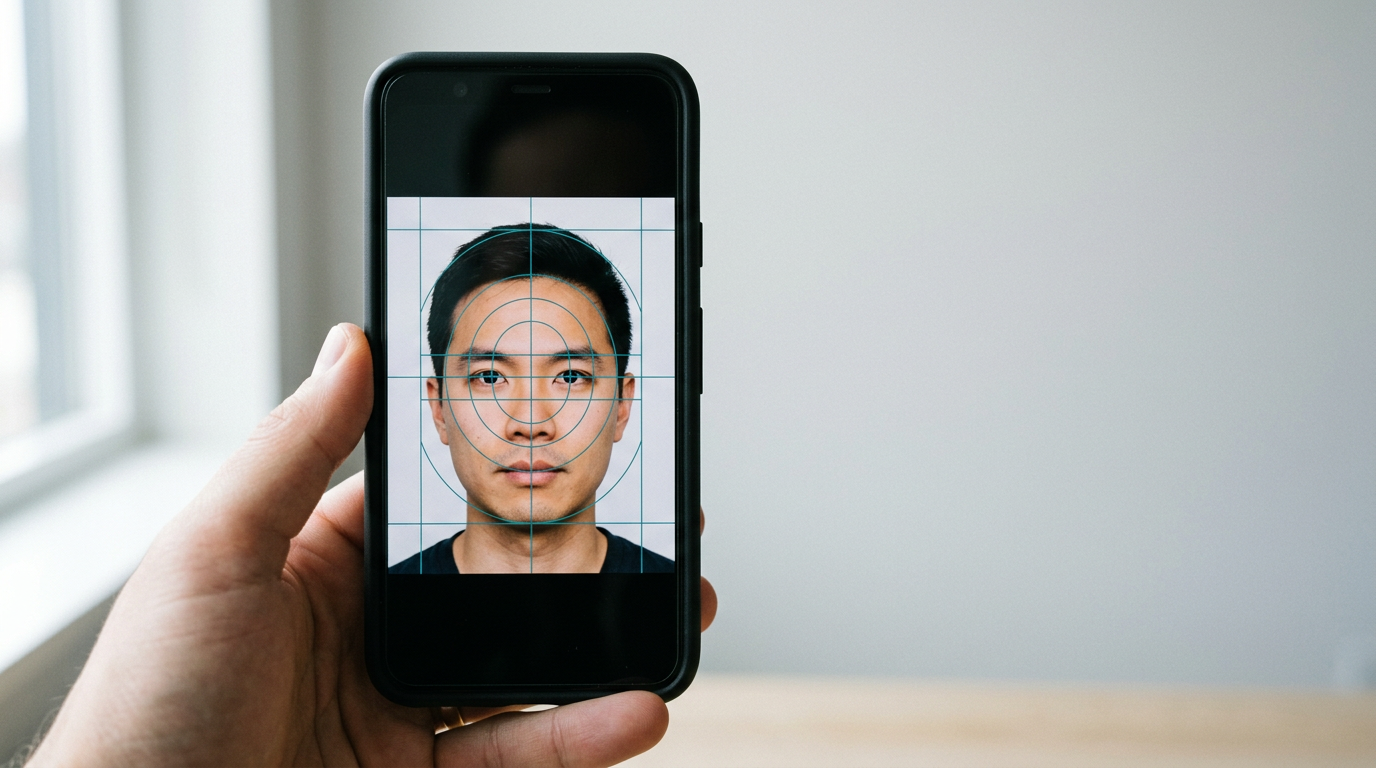
The moment the loading spinner on the Irish Passport Online portal stops and flashes a red rejection error, most applicants assume they framed the shot incorrectly. In reality, the algorithm rarely trips on standard framing; it trips on shadows and aspect ratios. Understanding the strict digital thresholds of the biometric scanner is the only way to meet Irish passport photo requirements on the first attempt, preventing weeks of processing delays for a simple travel document.
Quick Summary
The Irish Passport Service uses an automated biometric validation system that rejects images failing strict dimensional and lighting parameters before a human ever reviews them. Passing this initial digital gate requires precise adherence to specific aspect ratios and contrast levels.
- Digital uploads must be a minimum of 715 pixels wide by 951 pixels high.
- The system requires a plain light grey, white, or cream background with zero texture.
- Infant photos must show open eyes and no supporting hands, though minor positional leeway exists for babies under six months.
- Drop shadows under the chin or behind the ears are the primary cause of automated biometric rejection.
Table of Contents
- Why the Biometric Algorithm Flags Your Upload First
- How the Ireland Passport Photo Size Breaks Standard Templates
- Where Parents Fail Most Often With Infant Applications
- What Background and Lighting Parameters Actually Require
- When to Rely on Manual Uploads Over Retail Digital Codes
- FAQ
- Recommended Reads
Why the Biometric Algorithm Flags Your Upload First
When you upload an image to the Irish Passport Online service, a human officer does not look at it immediately. The file is first parsed by an automated biometric validation algorithm designed to map the geometry of your face. This system measures specific distances: the gap between the centers of your pupils, the distance from the bottom of the chin to the crown of the head, and the symmetry of the jawline.
If the algorithm cannot establish these anchor points within a fraction of a millimeter, it kicks the application back with a generic error. The system relies heavily on edge-detection logic to find the boundary between the jawline and the neck. If you stand under a single overhead light, you create a dark drop shadow under your chin. The validation software interprets this shadow as a continuation of your face, incorrectly calculating the chin-to-crown ratio and instantly rejecting the upload.
Similarly, the algorithm hunts for the contrast between the iris and the whites of the eyes to measure pupil distance. Glare on eyeglasses or a slight squint reduces this contrast, causing the facial map to fail entirely. Glasses should be removed entirely for the photograph, as even anti-reflective coatings can bounce enough light to obscure the exact center of the pupil. For anyone seeking to ensure their document passes, consulting A Complete Guide to Irish Passport Photo Requirements for 2026 clarifies exactly how these biometric markers are scored.
Practical rule: Never edit, airbrush, or apply filters to the image. Altering the pixel data around blemishes or wrinkles smooths out the micro-textures the biometric algorithm uses to verify that the image is a genuine, unmanipulated photograph of a human face.
How the Ireland Passport Photo Size Breaks Standard Templates
Applicants outside of Europe often attempt to use local templates for Irish applications, which immediately causes formatting errors in the online portal. Because the ireland passport photo size is strictly rectangular, forcing a square format into the upload tool results in a distorted or improperly cropped file.
The digital requirement for Ireland is a minimum of 715 pixels wide by 951 pixels high. This establishes a specific 3:4 aspect ratio. When printed, the physical dimensions sit between 35mm x 45mm and 38mm x 50mm, with the subject's face filling the vast majority of the vertical frame.
By contrast, if you are applying from outside the European Union, local standards are entirely different. For instance, the American Passport Photo Requirements and Size Specs dictate a rigid 2x2 inch (51x51mm) square. If you upload a standard US square file to the Irish portal, the system forces a crop. You are left choosing whether to cut off the crown of the head or slice into the chin, both of which trigger an automatic rejection from the biometric scanner.
File size limitations also create silent failures. The Irish portal accepts files up to 9MB, but heavy compression from sending an image through a messaging app like WhatsApp or iMessage destroys the necessary pixel density. A file that looks clear on a smartphone screen often lacks the resolution required for the algorithm to map the iris. To understand the exact pixel density required across different global formats, reviewing Passport Size Photo Dimensions in 2026: How to Meet Standard Requirements and Avoid Rejection can prevent severe compression errors before uploading.
Where Parents Fail Most Often With Infant Applications
Photographing adults is a matter of following instructions; photographing infants is an exercise in mitigating failure. The Irish Passport Service enforces the same biometric standards for babies as they do for adults, with very narrow exceptions.
The most frequent cause of rejection for infant applications is the presence of a supporting hand. Parents often try to hold the baby upright, assuming that if their hand is obscured behind the baby's neck, it will pass. However, human fingers altering the silhouette of the infant's shoulders or the fabric of their shirt will be flagged by the background removal and edge-detection software. The subject must be entirely isolated in the frame.
To achieve this, the standard approach is laying the infant on their back on a flat surface covered with a plain, light-colored sheet. While this solves the support problem, it introduces a severe lighting issue. The person taking the photograph leans over the baby, casting a large shadow directly across the infant's face or onto the sheet behind them. The system cannot distinguish the edge of the baby's head from the dark shadow cast on the background.
There is a strict operational distinction based on the infant's age. For babies under six months old, the Irish Passport Service does not require the infant to be looking directly at the camera, but the eyes must still be open and visible. For toddlers and infants over six months, the rules tighten: they must look forward, and toys or pacifiers are strictly forbidden. A pacifier obscures the mouth and jawline, making it impossible for the software to measure the lower third of the face. Understanding how the UK handles similar edge-cases, detailed in Understanding the 2026 UK Passport Photo Requirements: Size and Framing Standards, shows that European biometric systems universally reject any obstruction of the jaw.
Practical rule: Photograph infants from directly above while standing adjacent to a large, diffused light source like a frosted window, ensuring your own body does not block the ambient light falling on the baby's face.
What Background and Lighting Parameters Actually Require
Submitting a compliant irish passport photo requires more than just standing in front of a white wall. The system mandates a plain light grey, white, or cream background. Pure white is often problematic when captured on a smartphone because the auto-exposure settings will darken the subject's face to compensate for the bright background, leading to a silhouette effect.
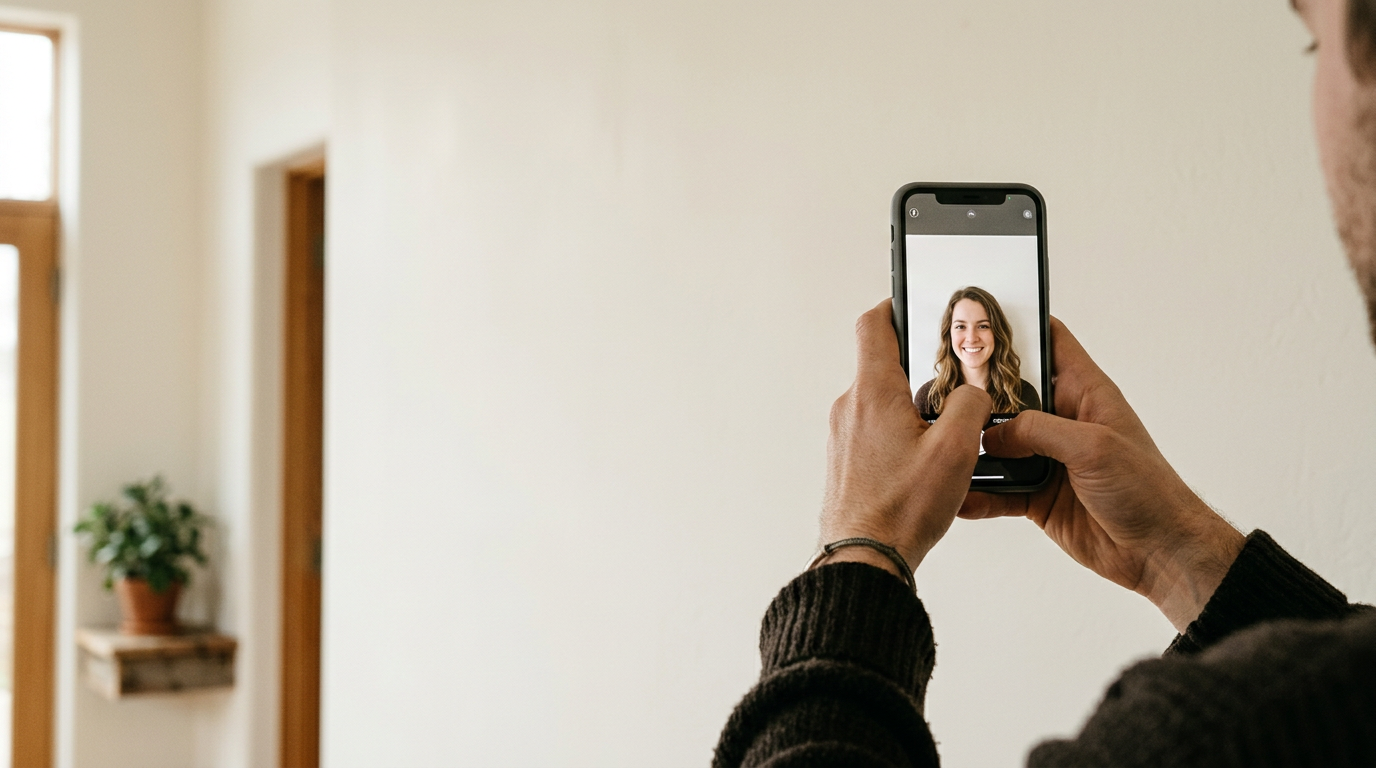
The algorithm requires even illumination across the face. If one side of the face is brightly lit by a window and the other side falls into heavy shadow, the contrast threshold is breached. The system measures the tonal difference between the left and right cheeks; if the variance is too high, it assumes the facial structure is asymmetrical and rejects the image.
Texture on the background is equally destructive. Wood paneling, textured wallpaper, or a wrinkled bedsheet introduces high-contrast lines behind the subject's head. The edge-detection algorithm struggles to separate the texture of the background from the texture of the applicant's hair. If the software cannot definitively map where the hair ends and the background begins, the submission fails. For a deeper breakdown of how to prepare the physical environment for a home shoot, How to Meet the 2026 Irish Passport Photo Requirements for Fast Approval outlines the exact lighting setups that satisfy the scanner.
Clothing choice directly impacts the background separation mechanism. Wearing a light grey or white shirt against a light grey or white background causes the applicant's shoulders to blend into the wall. The algorithm needs a hard, high-contrast line at the shoulders to establish the bottom of the frame. Always wear a dark, solid color to force a clean separation between the subject and the required light background.
When to Rely on Manual Uploads Over Retail Digital Codes
The Irish Passport Service heavily promotes the use of participating photo providers who supply a unique digital code. You have your picture taken at a pharmacy or studio, they give you a code, and you enter it into the Passport Online portal. The provider securely transmits the image directly to the government servers, bypassing file size and aspect ratio issues entirely.
However, this system relies on a closed network of participating retailers primarily located within Ireland and the UK. For expatriate families applying from Australia, the United States, or Canada, these digital codes are entirely useless. A code generated by an Australian post office is formatted for the Australian passport system and cannot be read by the Irish portal.
Expatriate applicants must therefore use the manual digital file upload path. This places the entire burden of compliance on the applicant. You must ensure the file is in JPEG format, exceeds the 715x951 pixel floor, stays under the 9MB ceiling, and perfectly matches the strict biometric lighting parameters.
When applying overseas, the timeline for rejection becomes critical. If you live in Melbourne and mail physical documents to Dublin alongside a digital upload, a rejected image pauses the entire application. By the time you receive the notification, retake the image, and re-upload it, you have added weeks to the processing time. Mastering the exact digital specifications, as explained in Mastering the Exact Ireland Passport Photo Size and Guidelines for 2026, is not optional for overseas applicants; it is the only way to secure a travel document within the standard processing window.
FAQ
Can I smile in an Irish passport photo?
No. You must maintain a neutral expression with your mouth closed. Smiling alters the shape of your cheeks and jawline, which prevents the biometric scanner from accurately mapping your facial geometry.
Do babies need to have their eyes open for the photograph?
Infants under six months old are given slight leeway if their eyes are partially closed, but the pupils must still be visible to the camera. Babies over six months must have their eyes fully open and looking forward.
Are glasses allowed if there is no glare on the lenses?
The Irish Passport Service strongly recommends removing all glasses. Even if you cannot see glare with the naked eye, the camera flash or ambient light can create micro-reflections that obscure the iris, leading to an automated rejection.
Why does the upload portal say my image resolution is too low?
The portal requires a minimum file size of 715 pixels wide by 951 pixels high. If you sent the image to your computer via a messaging app or email client that automatically compresses attachments, the pixel density was reduced below the acceptable threshold.